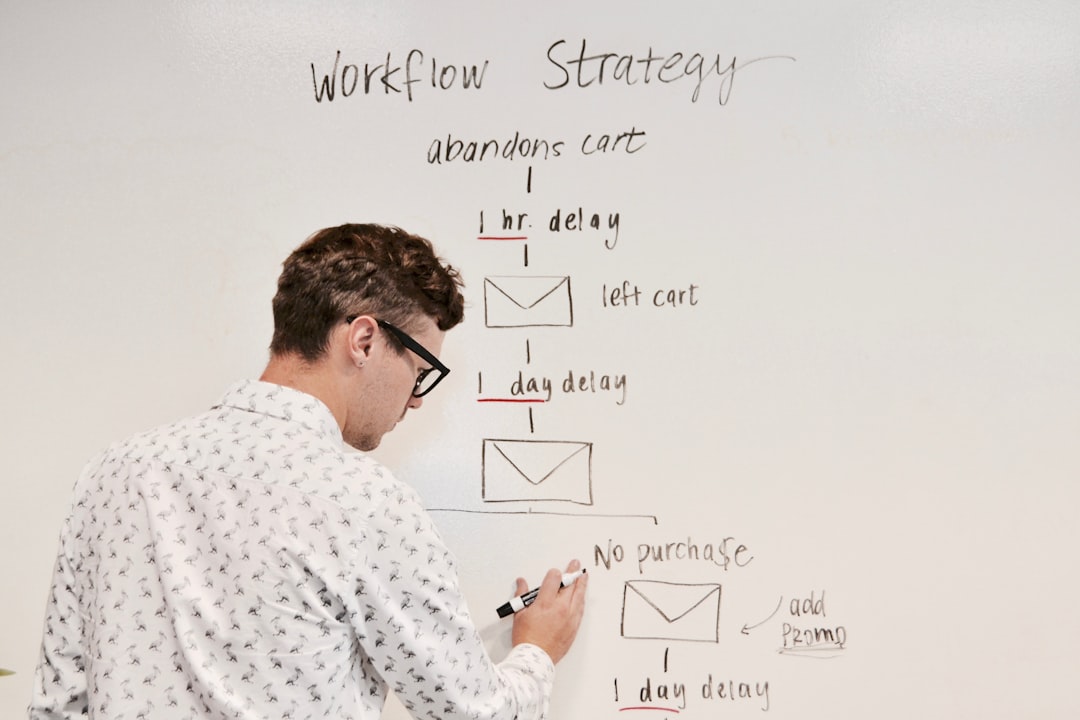
In any competitive game, simply knowing the controls isn’t enough to secure a win. Button-mashing might get you past the tutorial, but to beat the final boss, you need a plan. You need to understand your enemy’s patterns, manage your resources, and execute a series of moves designed for victory. The same principle applies to winning online. This is where understanding what is a content strategy becomes your ultimate playbook. It’s the high-level tactical map that guides every article you write, every video you produce, and every post you share, ensuring each action serves a single, unified purpose: to win.
What is a Content Strategy? Your Ultimate Tactical Map
A content strategy is the master plan that governs the creation, publication, and management of your content. It’s not just a list of blog post ideas; that’s a content plan, which is like your turn-by-turn move list. The strategy is the overarching “why” that dictates those moves. It answers the big questions before you even enter the arena.
Think of it like building a competitive deck in a card game. You don’t just throw in random powerful cards. You decide on an archetype—aggro, control, combo—and every card you select must support that core objective. Your content strategy is your deck’s archetype. It defines who you’re playing against (your audience), what your win condition is (your goals), and how your individual pieces of content (your cards) will work together to achieve it.
Content Strategy vs. Content Plan: The Macro and the Micro
It’s a common point of confusion, so let’s clear the board. These two terms are often used interchangeably, but they represent different levels of planning.
- Content Strategy (The Macro): This is your long-term vision. It’s the high-level thinking about your brand’s voice, your audience’s needs, your primary goals, and how content will help you achieve them. It’s deciding you’re going to win by controlling the board, not by direct damage.
- Content Plan (The Micro): This is the operational, short-term execution of your strategy. It includes your content calendar, specific topics, keywords you’ll target, and publication dates. It’s the specific sequence of cards you plan to play over the next few turns.
A solid plan without a strategy is just noise. A brilliant strategy without a plan is just a dream. You need both to dominate.
Why a Cohesive Content Strategy is Your Key to Victory
Jumping into content creation without a strategy is like trying to speedrun a game you’ve never played. You’ll waste time on dead ends, miss crucial power-ups, and get frustrated by a lack of progress. A well-defined strategy is what separates amateurs from the pros.
A strong strategy provides the efficiency and focus needed to outmaneuver competitors. It ensures every piece of content is a calculated move, not a random guess. This is because the best strategy to win at a game, whether on a screen or in a search engine, is always built on foresight and planning, not just reaction and luck.
It transforms your efforts from a scattered grind into a targeted campaign. You stop creating content for the sake of it and start creating assets that build on each other, compounding their value over time and establishing your authority in your chosen niche.
The Preparation Phase: Gearing Up for Your Content Campaign
Before you can execute a flawless strategy, you need to complete the prep quests. This phase is all about intelligence gathering and resource allocation. Skipping this is like entering a raid with broken gear and no consumables—you’re setting yourself up to fail.
- Key Requirement: A clear understanding of your brand’s unique value proposition. What makes you different from every other player in the field?
- Key Requirement: Access to basic analytical tools. Google Analytics, Google Search Console, and a keyword research tool (even a free one) are your starting loadout.
- Key Requirement: Dedicated time for research. You cannot rush the scouting phase. The data you gather here informs the entire campaign.
Define Your Objective (The Win Condition)
What does the “Victory” screen look like for you? You can’t win if you don’t know the rules of the game. Your goals must be specific, measurable, achievable, relevant, and time-bound (SMART). Vague goals like “get more traffic” are useless.
Instead, define precise objectives:
- “Increase organic search traffic by 25% in the next six months.”
- “Generate 100 qualified leads per month from our blog by the end of the year.”
- “Become one of the top 3 ranking sites for the keyword cluster ‘[Your Core Topic]’ within 18 months.”
This objective is your North Star. Every decision you make should be weighed against whether it helps you achieve this specific win condition.
Scout Your Target Audience (Know Your Opponent’s Weak Spots)
You can’t design effective attacks if you don’t know your target. Creating detailed audience personas is critical. This isn’t just about demographics; it’s about psychographics—their goals, challenges, and pain points.
What are their “weak spots”? What problems are they desperately trying to solve? What questions keep them up at night? Your content should be the solution, the ultimate walkthrough for their specific challenges. Where do they “spawn”? Are they on Reddit, LinkedIn, specific forums, or TikTok? Knowing this informs your content distribution strategy later on.
Analyze the Metagame (Competitor Research)
No strategy exists in a vacuum. You must understand the current “meta”—the landscape defined by your competitors. Identify the top players in your niche and analyze their playbook.
- What topics do they cover extensively?
- What keywords do they rank for? (Their “controlled territory”)
- What content formats are they using successfully? (Video, long-form articles, podcasts?)
- Where are the gaps in their coverage? (The “unclaimed territory” for you to conquer)
This isn’t about copying them. It’s about finding their weaknesses and identifying opportunities where you can provide more value, offer a unique angle, or cover a topic more comprehensively.
Assemble Your Toolkit (The Loadout)
Every quest requires the right gear. For content strategy, your tools help you gather intelligence, execute your plan, and measure your results. Your starting loadout should include:
- SEO & Keyword Research Tools: Ahrefs, SEMrush, Moz, or free options like Google Keyword Planner and Ubersuggest.
- Analytics Platform: Google Analytics 4 (GA4) and Google Search Console are non-negotiable.
- Project Management: Trello, Asana, Notion, or even a simple spreadsheet to build your content calendar and track progress.
- Content Creation Aids: Grammarly for editing, Canva for simple graphics, and a reliable CMS (like WordPress).
The Strategy: A Step-by-Step Walkthrough for Developing a Content Strategy
With your preparation complete, it’s time to execute the main campaign. This is the step-by-step process for building and launching a content strategy that gets results. Follow this sequence to move from planning to domination.
-
The Ideation Grind (Topic & Keyword Research)
This is the foundational grind of any content campaign. Using your SEO tools and your understanding of your audience’s pain points, you’ll build a massive list of potential topics and keywords. Focus on finding opportunities that balance search volume (how many people are looking for it), keyword difficulty (how hard it is to rank for), and relevance (how much it matters to your audience). This is like finding the perfect farming spot with high-XP mobs and a low respawn timer.
-
Choose Your Class (Content Formats)
Not all content is created equal. The format you choose should match the topic, the platform, and your audience’s preferences. Think of formats as character classes, each with unique strengths.
- Blog Posts/Articles: The high-DPS (Damage Per Second) warriors of SEO. Perfect for in-depth guides and targeting specific keywords.
- Videos: The Area-of-Effect (AOE) mages. Excellent for tutorials, product demos, and engaging storytelling on platforms like YouTube.
- Podcasts: The support class providing passive buffs. Great for building a loyal community and reaching audiences on the go.
- Infographics/Social Media Posts: The crowd-control specialists. Perfect for sharing digestible data and driving engagement.
A balanced party is often the most effective. Your strategy should define a primary format but also include others to support it.
-
Build Your Skill Tree (Content Pillars & Clusters)
To establish authority, you can’t just write about random topics. You need to use the topic cluster model. Think of this as a skill tree. Your “Pillar Page” is the core skill—a long, comprehensive guide covering a broad topic (e.g., “The Ultimate Guide to Deck-Building”).
Your “Cluster Content” pieces are the branching talents—shorter, more specific articles that target long-tail keywords related to the pillar (e.g., “Best Opening Moves for Aggro Decks,” “Understanding Card Advantage,” “How to Counter Control Decks”). You then internally link all the cluster pieces back to the main pillar page. This structure signals to search engines that you are an expert on the entire topic, boosting your authority and rankings for the whole cluster.
-
Map the Level (The Content Calendar)
This is where your strategy becomes an actionable plan. A content calendar is your quest log. It maps out what you’re publishing, when you’re publishing it, and who is responsible for creating it. A good calendar includes the topic, target keyword, content format, author, due date, and publication date. This eliminates guesswork and ensures a consistent, steady pace of high-quality content deployment.
-
Execute the Play (Content Creation & Optimization)
Now, you create the content. This stage is about quality and precision. Every piece should be the best possible answer to the user’s query. This means in-depth research, clear writing, and optimizing for on-page SEO (using your target keyword in the title, headers, and body text naturally). This is where you land the critical hit. Don’t just meet the user’s expectation; exceed it so thoroughly that they have no need to look elsewhere.
-
Deploy Your Units (Promotion & Distribution)
Hitting “publish” is not the end of the mission. It’s the beginning of the distribution phase. You have to actively promote your content to get it in front of your target audience. Your strategy should outline which channels you will use.
- Share it on your social media channels.
- Send it to your email newsletter subscribers.
- Post it in relevant online communities and forums (like Reddit or Discord).
- Consider outreach to other sites for backlinks.
Creating great content and not promoting it is like discovering a legendary weapon but leaving it in your inventory.
-
Review the Replay (Measurement & Analysis)
The campaign is never truly over. You must constantly review the data to see what’s working and what isn’t. This is like watching a replay of your match to spot mistakes and refine your tactics. Use Google Analytics and Search Console to track key metrics:
- Organic Traffic: Are people finding you through search?
- Keyword Rankings: Are you climbing the ladder for your target terms?
- Engagement Metrics: Time on page, bounce rate. Is your content holding people’s attention?
- Conversions: Is the content driving the actions defined in your objective?
Use these insights to double down on what works, improve or remove what doesn’t, and continuously optimize your strategy for better performance.
Common Pitfalls: Why Most Content Strategies Fail (And How to Avoid a Wipe)
Many players start a content campaign with enthusiasm, only to wipe on the first boss. Failure usually comes down to a few predictable mistakes. Knowing them ahead of time is the key to avoiding them.
Pitfall 1: The “One and Done” Raid (Inconsistency)
This is the most common failure. A team gets excited, publishes three amazing articles in one week, and then goes completely silent for two months. Consistency is crucial for both search engine algorithms and audience trust. A content calendar is your best defense against this.
Pitfall 2: Ignoring the Loot Drop (Skipping Analytics)
You wouldn’t ignore a legendary item drop, so don’t ignore your data. Many creators operate on “gut feeling,” creating content they think their audience wants. Analytics tell you what your audience actually wants. Making decisions without data is playing with the monitor turned off.
Pitfall 3: Mismatched Build (Wrong Content for the Audience)
This happens when you fail the audience scouting phase. You might create highly technical, expert-level guides when your audience is made up of complete beginners. Or you create simplistic content for a pro-level audience. This mismatch leads to high bounce rates and tells search engines your content isn’t a good fit for the query.
Pitfall 4: Forgetting to Buff (No Promotion)
The “if you build it, they will come” mentality is a myth. You can have the best content in the world, but if no one sees it, it has zero value. Promotion and distribution must be a core, planned part of your strategy from day one, not an afterthought.
FAQ: Your Content Strategy Questions Answered
What is the difference between a content strategy and a content marketing strategy?
This is a subtle but important distinction. A content strategy is a subset of a content marketing strategy. The content strategy focuses specifically on the planning, creation, and management of content assets (the “what” and “how”). A content marketing strategy is broader; it includes the content strategy but also encompasses how that content will be used to attract, engage, and convert a target audience to meet business goals, including distribution, promotion, and measurement (the “why” and “where”). Think of content strategy as your build order and content marketing strategy as the entire game plan, including how you’ll manage your economy and scout the map.
How often should I update my content strategy?
You should conduct a major review of your content strategy at least once a year. However, you should be monitoring its performance monthly or quarterly. Think of it like a game’s meta. A major patch (like a Google algorithm update) might require you to immediately re-evaluate your entire approach. Minor balance changes (shifting audience interests or new competitor tactics) might only require small tweaks. Stay flexible and be ready to adapt to the changing game.
Can a small team or a single person have an effective content strategy?
Absolutely. A content strategy is not about the size of your team; it’s about the intelligence of your approach. In fact, it’s more important for a solo creator or small team because it forces you to be efficient with limited resources. You can’t afford to waste time on content that doesn’t work. A strategy ensures every action is focused and has the maximum possible impact. It’s the classic case of a skilled solo player clearing a dungeon that was designed for a full party—it’s all about having the right build and a flawless plan.
What are some examples of a good content strategy?
A classic example in the marketing world is HubSpot. They wanted to own the topic of “inbound marketing.” They created a massive pillar page defining the term, then produced thousands of cluster articles, tools, and templates covering every conceivable sub-topic. For a gaming example, look at a site like Fextralife for a game like Elden Ring. They don’t just post random tips; they build a comprehensive wiki with interconnected pages for every weapon, boss, and location, creating a complete content ecosystem that becomes the definitive resource for players.
Conclusion
Understanding what a content strategy is and how to build one is the single most important step in turning your content efforts from a hobby into a high-performance engine for growth. It’s the tactical playbook that provides clarity, focus, and a clear path to victory. By defining your objective, preparing your resources, and executing a deliberate, step-by-step plan, you stop button-mashing and start playing like a pro. You move from being just another player to becoming the one who masters the game.
Be sure to comment below if this article helped you!
Leave a Reply