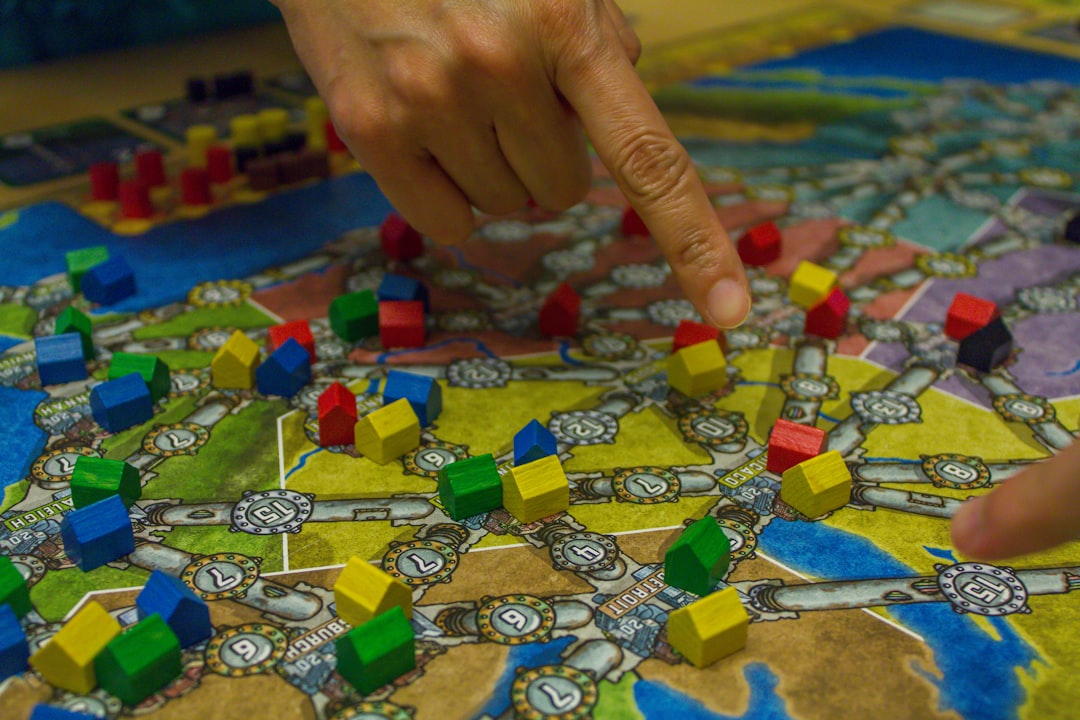
Defining the best strategy games of all time is more than a matter of opinion; it’s an analysis of mechanics, balance, and the sheer depth of decision-making. You’re not looking for a pretty world or a compelling story. You’re looking for a tactical puzzle box that rewards intellect, foresight, and flawless execution. This is about the games that have defined genres and continue to challenge the sharpest minds. We’ve analyzed the titans of the genre to give you the definitive tactical playbook.
What Makes a Strategy Game One of the All-Time Greats?
A truly great strategy game isn’t just complex; it’s elegantly complex. Victory and defeat must hinge on player skill, not random chance. We evaluate these games on several core principles: strategic depth, replayability, balance, and a high skill ceiling. The games on this list don’t just let you execute a strategy; they demand you create one, adapt it, and overcome an opponent who is trying to do the same.
Strategic depth means your decisions have cascading consequences. Replayability is born from varied starting conditions, factions, or maps that make every match a unique problem. Balance ensures that multiple paths to victory are viable, preventing a stale meta. Finally, a high skill ceiling means there’s always a new tactic to learn, a micro-trick to master, or a grander strategic concept to grasp.
The Titans of Real-Time Strategy (RTS): A Look at the Best PC Strategy Games
Real-Time Strategy is a crucible of decision-making under pressure. It tests your ability to manage an economy (macro), control individual units (micro), and read your opponent’s actions, all at once. The games that stand out in this genre are legendary for their precision and competitive scenes.
StarCraft II: Legacy of the Void
StarCraft II is the gold standard for competitive RTS. With three completely asymmetrical factions (Terran, Zerg, Protoss), the game is a masterclass in balance and strategic diversity. Winning isn’t just about having more units; it’s about having the right units in the right place at the right time.
- Objective: Destroy all of your opponent’s buildings to win the match.
- Preparation: Select one of the three factions. Understand that each has a unique production mechanic and unit roster. We recommend starting with Terran for their straightforward mechanics.
- The Strategy: Your First 5 Minutes as Terran
- Build SCVs Continuously: Your Command Center should never be idle. This is your economic engine. Select it and constantly queue up new SCVs.
- Build a Supply Depot at 14/15 Supply: This prevents you from being “supply blocked,” which halts all unit production. The timing is critical to maintain momentum.
- Build a Barracks at 16/23 Supply: Once the Supply Depot is complete, build your first unit production structure. This signals the start of your military buildup.
- Build a Refinery: After the Barracks starts, build a Refinery on your Vespene Gas geyser. Gas is required for all advanced units and upgrades.
- Scout with an SCV: Send an early SCV across the map to your opponent’s base. The information you gain—what faction they are, what buildings they’re making—is more valuable than the single lost worker. This intel dictates your entire mid-game strategy.
- Common Pitfalls: Getting supply blocked is the most common beginner mistake. The second is failing to scout; playing blind in StarCraft II is a guaranteed loss against a competent opponent.
Age of Empires II: Definitive Edition
Where StarCraft is a sci-fi razor blade, Age of Empires II is a historical sledgehammer. It’s a slower-paced RTS that emphasizes economic development and strategic counters across four distinct “Ages.” Mastering the transition between these ages is the core of high-level play.
- Objective: Achieve victory through one of several conditions: Conquest (destroying all enemies), building and defending a Wonder, or controlling all Relics.
- Preparation: Choose from over 30 civilizations, each with unique bonuses and units. For beginners, the Britons are excellent due to their faster-working Archery Ranges, giving you a clear military focus.
- The Strategy: The “Fast Castle” Build Order
- Dark Age (First ~10 minutes): Focus entirely on economy. Build Villagers without pause. Assign your first six to Sheep, the next four to Wood, and the next to lure a Boar. The goal is to gather enough food and gold to advance to the Feudal Age as quickly as possible, typically with around 27-28 population.
- Feudal Age Transition: As you advance, build a Blacksmith and a Market. You need these two buildings to be eligible for the Castle Age. Produce only a few military units for defense if necessary; the goal is to save resources.
- Hit the Castle Age: By executing a tight build order, you can reach the Castle Age far faster than an unfocused opponent. This unlocks powerful units like Knights and unique civilization technologies. This timing advantage is your primary weapon. The best strategy to win at a game like this is to leverage these power spikes.
- Common Pitfalls: An idle Town Center is the cardinal sin; you must constantly produce Villagers. Neglecting to build military to defend against early rushes is another common failure. A perfect economy is useless if you’re dead.
Grand Strategy & 4X: Building Empires Across the Ages
If RTS is a knife fight, Grand Strategy and 4X (eXplore, eXpand, eXploit, eXterminate) games are global wars fought over centuries. These games are about long-term planning, diplomacy, and managing the complex machinery of an empire.
Sid Meier’s Civilization VI
The phrase “one more turn” was born from this series. Civilization VI is the pinnacle of the 4X genre, challenging players to guide a historical civilization from the Stone Age to the Information Age. Victory can be achieved through military conquest, cultural dominance, scientific achievement, or religious conversion.
- Objective: Be the first civilization to achieve one of the five Victory Conditions (Science, Culture, Domination, Religion, Diplomacy).
- Preparation: Select a Leader and Civilization. Each offers powerful bonuses toward a specific victory type. For a straightforward path, choose Trajan of Rome. His free roads and monuments provide a powerful early-game boost.
- The Strategy: Your First 20 Turns as Rome
- Settle Your Capital: Settle in place unless there’s a demonstrably better tile (e.g., next to a Natural Wonder) within one turn’s movement. Time is a resource.
- First Build – Scout: Your immediate priority is information. A Scout can find Tribal Villages (free bonuses), other civilizations, and optimal locations for future cities.
- First Research – Animal Husbandry or Pottery: This choice depends on your starting resources. Animal Husbandry reveals Horses and Cattle, while Pottery allows for Granaries, which boost population growth.
- Expand Early: Your goal is to settle at least two more cities as quickly as possible. Use your starting Warrior to escort your Settler and protect it from Barbarians. A wide empire is almost always more powerful than a tall one in Civ VI.
- Common Pitfalls: Neglecting to build an early military is an invitation for Barbarians or an aggressive neighbor to destroy you. Another pitfall is settling cities too close together; this limits their long-term growth potential as they compete for the same tiles.
Crusader Kings III
Crusader Kings III redefines “grand strategy” by focusing not on a nation, but on a dynasty. You play as a ruler and their descendants. The game is less about painting the map your color and more about navigating the treacherous world of medieval politics, assassinations, and family drama. It’s a strategy game that generates incredible stories.
- Objective: There is no formal “win” condition. The goal is to ensure your dynasty survives, grows in power and prestige, and doesn’t fall victim to internal strife or external threats.
- Preparation: The “New Player” start in Ireland (1066) is highly recommended. It’s a relatively isolated and stable region, allowing you to learn the core mechanics of war, marriage, and vassal management without being targeted by a massive empire.
- The Strategy: Securing Your Legacy
- Secure an Heir: Your first action should always be to marry. Look for a spouse with high stats, particularly Stewardship, or a positive congenital trait like “Genius” or “Herculean.” Produce a male heir to secure your succession.
- Manage Your Council: Appoint your most powerful vassals to your council, even if their stats aren’t perfect. This keeps them happy and less likely to plot against you. Set your Spymaster to “Disrupt Schemes” in your capital.
- Fabricate a Claim: Use your Realm Priest to fabricate a claim on a weaker, independent neighbor. This is your primary method for early, legitimate expansion.
- Common Pitfalls: Ignoring succession laws can lead to your realm fracturing among your children upon your death. The most common pitfall is expanding too quickly and acquiring vassals of a different culture or religion, which creates a constant source of internal rebellion.
Turn-Based Tactics: Where Every Single Move Counts
In turn-based tactics, time is not a factor. Instead, the pressure comes from making the absolute optimal decision with the information you have. Every action, every unit position, and every cooldown must be calculated. One wrong move can lead to a cascading failure.
XCOM 2: War of the Chosen
XCOM 2 places you in command of a guerrilla force fighting an entrenched alien occupation. You manage a global resistance on a strategy map and command a small squad of soldiers in high-stakes, turn-based tactical missions. The game is known for its difficulty and the emotional attachment players form with their customizable, permadeath soldiers.
- Objective: Build a global resistance network and defeat the alien leaders before their “Avatar Project” doomsday clock reaches its end.
- Preparation: In the early game, focus on building the Guerrilla Tactics School first. This allows you to upgrade your squad size, a critical power boost.
- The Strategy: The First Contact Rule
- Use Concealment: Most missions start with your squad concealed. Use this to set up an ambush. Position your soldiers in high-cover positions, preferably with elevation advantages, before triggering the first group of enemies (a “pod”).
- Initiate with an Overwatch Trap: Position your squad so that most of them have a clear line of sight on the enemy pod. Set them all to “Overwatch” (a reaction shot on any enemy that moves). Then, use your final soldier to take a shot, revealing your squad.
- Focus Fire: As the enemies scatter from the ambush, they will trigger your Overwatch shots. On your next turn, use your entire squad to eliminate one enemy at a time. An injured enemy deals full damage, but a dead enemy deals none. The best strategy to win at a game like XCOM is to minimize the number of active threats each turn.
- Common Pitfalls: The number one mistake is activating a second pod of enemies while the first is still alive. This is almost always a squad wipe. The second is using the “Dash” command (two moves) aggressively, which leaves your soldier exposed and unable to shoot.
Into the Breach
From the creators of FTL: Faster Than Light, Into the Breach is a masterclass in minimalist design. It’s a turn-based tactics game where you control a squad of three giant mechs fighting giant insects (the Vek). The key difference? You know exactly what the enemy is going to do on their next turn. The game becomes a puzzle: how do you use your limited actions to prevent as much damage as possible?
- Objective: Survive a set number of turns while protecting civilian buildings. The health of your “Power Grid” is your primary resource.
- Preparation: Choosing the right mech squad is paramount. The “Rift Walkers” are the perfect starting squad, offering a balanced mix of direct damage, artillery, and unit displacement.
- The Strategy: Core Principles of Threat Mitigation
- Prioritize Grid Defense: Your first priority is always to stop an attack that targets a building. Even if it means taking damage to a mech, the Power Grid is more important.
- Displace, Don’t Just Destroy: Often, the best move isn’t to kill a Vek, but to push it. A Vek pushed onto another tile will have its attack cancelled. Better yet, push a Vek so that its attack hits another Vek.
- Block Emerging Vek: Before new Vek spawn from the ground, the tile will glow. If you can, move a mech or an enemy onto that tile. This will block the Vek from emerging and deal damage to whatever is on the tile.
- Common Pitfalls: Focusing too much on killing Vek instead of preventing building damage. Another is forgetting about enemy spawn blocking, which is one of the most powerful tactical options you have.
Frequently Asked Questions About the Best Strategy Games
What is the hardest strategy game to master?
While difficulty is subjective, games like Dwarf Fortress or the grand strategy titles from Paradox Interactive (e.g., Europa Universalis IV) are often cited as the most difficult. Their complexity stems from dozens of interconnected systems that are often poorly explained. However, for pure competitive difficulty, the skill ceiling of StarCraft II is arguably the highest, demanding near-perfect mechanics, strategic foresight, and hundreds of actions per minute.
Are RTS games a dying genre?
Not at all. While the genre doesn’t have the same mainstream dominance it did in the late 90s and 2000s, it maintains a passionate and dedicated community. Games like Age of Empires IV, the continued success of StarCraft II‘s competitive scene, and upcoming titles show that the core formula of real-time economic and military management is still highly compelling. The genre has evolved, but it is far from dead.
How can I get better at strategy games?
Improving at strategy games involves a three-step process. First, learn the fundamentals. For an RTS, this means mastering a build order. For a turn-based game, it means understanding the rock-paper-scissors of unit counters. Second, analyze your losses. Watch replays of your games and identify the exact moment things went wrong. Was it a bad engagement? A missed economic opportunity? Third, learn from better players. Watch professional streams or tutorials for the specific game you’re playing to understand high-level decision-making and strategic concepts you may have missed.
The best strategy games of all time are more than just entertainment; they are intellectual gymnasiums. They push you to think critically, plan ahead, and adapt under pressure. Whether you’re commanding legions, leading a dynasty, or guiding a small squad of soldiers, the thrill of a well-executed plan leading to victory is a reward that few other genres can offer.
Be sure to comment below if this article helped you!
Leave a Reply