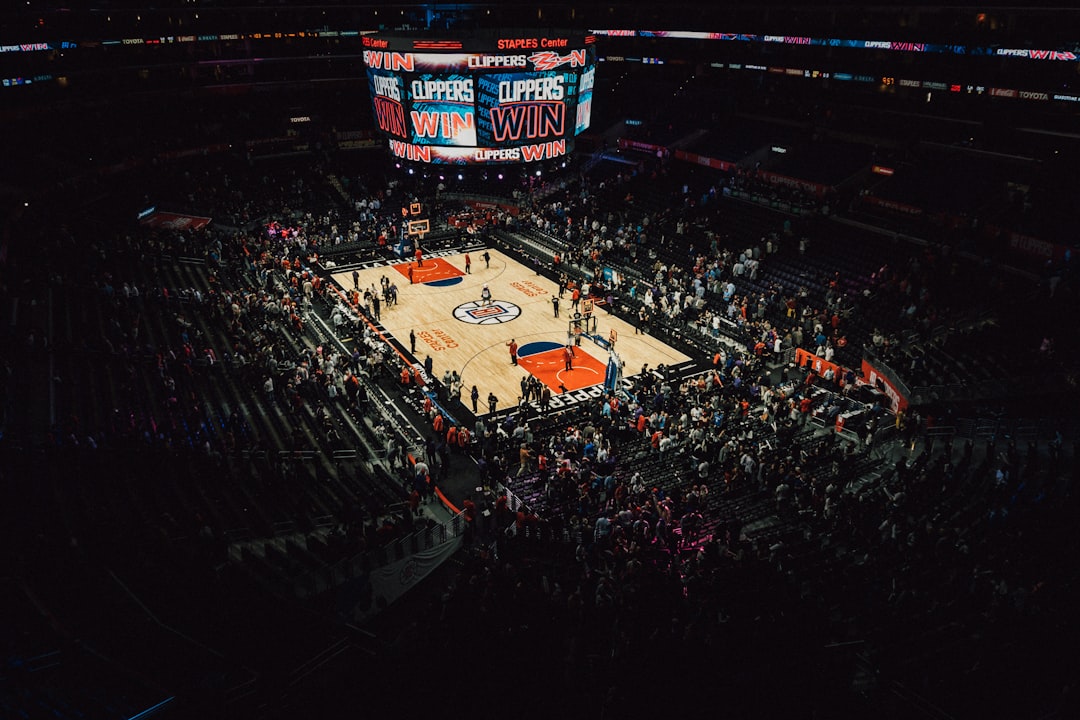
When you’re searching for when is the next Knicks game, you’re not just looking for a date and time. You’re identifying your next objective. For the dedicated player, every matchup on the schedule represents a new tactical challenge, a fresh puzzle to solve on the virtual court. This guide isn’t about watching from the sidelines; it’s your playbook for simulating and dominating the New York Knicks’ upcoming games in NBA 2K24, turning every tip-off into a guaranteed victory screen.
A Tactical Breakdown for the Next Knicks Game
Success isn’t accidental; it’s engineered. Before you can even think about executing in the fourth quarter, you need to complete the pre-game analysis. Understanding your opponent’s virtual DNA—their strengths, weaknesses, and AI tendencies—is the first phase of the battle. This is where you lay the groundwork for the win.
Objective: Defining the Victory Condition
The primary objective is simple: win the game. However, a true strategist looks beyond the final score. A dominant victory involves controlling the flow of the game, exploiting specific matchups, and neutralizing the opponent’s core strengths. Your goal is not just to outscore the Knicks, but to systematically dismantle their game plan from the opening possession.
A successful operation will see you achieve at least two of the following secondary objectives: hold their primary scorer (Jalen Brunson) below his season average, win the rebound battle by at least eight boards, and force their AI into committing more than 10 turnovers. Achieving these sub-goals ensures your victory is not a matter of luck, but a result of superior tactics.
Preparation: Scouting the Modern Knicks Roster in NBA 2K24
Your strategy is only as good as your preparation. Loading into a match without scouting the enemy is a recipe for failure. The Knicks in NBA 2K24, especially after the latest roster updates, are a formidable defensive unit with a potent, drive-heavy offense. Here’s what you need to know.
- Key Personnel Analysis: The AI is built around the talents of its star players. Your primary focus must be on Jalen Brunson. His “Handles for Days” and “Fearless Finisher” badges make him a nightmare to contain in isolation. On the defensive end, OG Anunoby possesses a high steal rating and the “Clamps” badge, making him a dangerous on-ball defender you must account for.
- Systemic Strengths: The Knicks’ AI reflects their real-world coaching. They crash the offensive glass relentlessly, thanks to the high ratings of centers like Mitchell Robinson and Isaiah Hartenstein. Their defensive settings are aggressive, often attempting to trap ball-handlers on pick-and-rolls.
- Exploitable Weaknesses: While their defense is stout, their three-point shooting can be inconsistent outside of a few key players. Forcing them into contested, long-range shots is a high-percentage defensive strategy. Their bench depth, while solid, lacks a primary shot creator, meaning you can often gain an advantage when their starters are resting.
- Required Loadout: Before starting, ensure your team’s playbook includes multiple “Pick & Roll” options and at least two “Isolation” plays for your best scorer. Defensively, set your “Points of Emphasis” to “Limit Perimeter Shots” and “Crash Defensive Glass” to directly counter their primary strengths.
The Strategy: How to Win Your Next Knicks Game Step-by-Step
With your objective set and your preparation complete, it’s time to execute. We will break down the game into phases, just like a multi-stage boss encounter. Each quarter presents a new set of challenges and opportunities. Adhere to the plan, and you will control the engagement from start to finish.
Phase 1: The First Quarter – Establishing Control
The opening minutes are about gathering data and setting the tone. Your goal here is to force the AI to react to you, not the other way around. This is how you seize the initiative.
- Probe with the Pick & Roll: On your first three offensive possessions, run a standard “Pick & Roll” play. This is a diagnostic tool. Watch how the Knicks’ AI defends it. Do they switch? Do they go over or under the screen? Do they bring a third defender to help? The information you gather here is critical for your second-quarter adjustments.
- Identify the Weakest Link: Use the “Player Matchups” screen to find the Knicks’ worst on-ball defender currently on the floor. Execute an “Isolation” play to attack that player directly with your best scorer. Why: Scoring easily on a specific player can lower their AI’s “player morale,” making them less effective for the rest of the game.
- Control the Tempo: Do not get into a running match. The Knicks thrive in a physical, half-court game. By walking the ball up the court and using most of the shot clock, you limit their total number of possessions and force their aggressive defenders to play disciplined for longer stretches, which often leads to fouling.
Phase 2: The Second & Third Quarters – Mid-Game Adjustments
The AI in NBA 2K24 makes adjustments. Now you must counter-punch. This phase is about exploiting the patterns you identified in the first quarter and managing your resources effectively.
- Adapt Your Offensive Attack: Based on your initial probing, adjust your play calls. If the AI is aggressively switching on screens, switch to “Pick & Pop” plays with a shooting big man to exploit the mismatch. If they are dropping back, use the screen to create an open three-point shot for your ball-handler.
- Deploy Your Bench Strategically: Do not substitute your entire starting five at once. Stagger your substitutions to ensure you always have at least one primary scorer and one elite defender on the court. Why: This prevents the AI from going on a run against your weaker second unit, a common pitfall for many players.
- Change Defensive Assignments: If Jalen Brunson is having success, go into your defensive settings and switch your best perimeter defender onto him. Set the on-ball pressure for that specific matchup to “Tight.” This will drain his stamina faster and force the AI to initiate offense with a less capable player. Knowing how to win a game often comes down to these small, crucial adjustments.
Phase 3: The Fourth Quarter – Securing the Victory
The final phase is about execution under pressure. You’ve built a lead or kept the game close; now it’s time to close it out. Mistakes in the fourth quarter are the most costly.
- Run High-Percentage Plays: This is not the time for experimentation. Revert to the one or two plays that were most effective in the first half. The objective is to get a clean, open look on every possession. Do not settle for contested jumpers.
- Milk the Clock: If you have the lead with under three minutes to play, use at least 20 seconds of the shot clock on every possession. This minimizes the number of chances the opponent has to catch up. A win is a win, whether by 2 points or 20.
- Manage the Foul Situation: Know how many fouls you have to give. If the Knicks’ AI is in the bonus, instruct your defenders to be less aggressive to avoid giving up easy points at the free-throw line. Conversely, if you need to stop the clock, foul their worst free-throw shooter to send them to the line.
Common Pitfalls: Why Players Fail Against the Knicks AI
Many players lose to the Knicks not because of a skill gap, but because they fall into predictable traps. Understanding these common failure points is essential for avoiding them.
Underestimating the Drive-and-Kick AI
A frequent mistake is over-committing to stop Jalen Brunson’s dribble penetration. Players will bring a second defender, leaving a shooter open on the perimeter. The AI is programmed to execute this drive-and-kick flawlessly. The Solution: Stay in front of Brunson with your primary defender using controlled movements (do not hold the “sprint” button). Trust your help defense to meet him at the rim, but do not leave the three-point line open.
Losing the Rebound Battle
The Knicks’ AI is coded to crash the offensive glass with ferocity. Many players get a defensive stop, only to immediately give up a second-chance opportunity. Relying on your AI teammates to box out is a losing strategy. The Solution: As soon as a shot goes up, manually switch to your player closest to the basket (usually your center or power forward) and immediately press and hold the “Box Out” button. Taking manual control is the only way to guarantee you secure the board.
Falling into “Hero Ball”
When the game gets tight in the fourth quarter, the temptation is to give the ball to your star player and try to win it with a series of difficult, contested shots. This is a low-percentage tactic that the AI can easily defend. The Solution: Maintain discipline. Continue to run your plays and trust the system that got you the lead. An open shot for a good shooter is always a better option than a contested shot for a great one. Victory is achieved through tactical execution, not individual heroics.
FAQ: Your Questions About When is the Next Knicks Game Answered
Navigating the tactical challenges of a virtual season requires more than just in-game skill. Here are answers to some common strategic questions that arise when preparing for your next opponent.
How does the real-life Knicks schedule impact my game in NBA 2K24?
The real-world NBA schedule, which you can find on the official NBA website or sports media outlets like ESPN, directly influences NBA 2K24‘s “MyTEAM” and “MyNBA” modes. The game often features “Moment Challenges” or dynamic goals tied to standout performances in real games. For example, if a Knicks player has a huge scoring night in reality, a challenge might appear in MyTEAM requiring you to replicate that feat for special rewards. Staying aware of the real schedule allows you to anticipate and prepare for these lucrative in-game events.
What are the optimal controller and coaching settings for a defensive team like the Knicks?
To effectively counter a tough defensive opponent, you need precise control. In your controller settings, set “Defensive Assist Strength” to a low value (between 10-25). This prevents the AI from pulling your defender out of position when you’re trying to stay in front of a shifty ball-handler. In the “Coach Settings” menu, set your “Defensive Focus” to “Focus on Jalen Brunson” and your “Team Focus” to “Physicality.” This tells your AI teammates to prioritize stopping their star and to match their aggressive style of play, which can lead to more favorable foul calls and turnovers.
Where can I practice these strategies before facing the Knicks in a high-stakes game?
The best place to drill these tactics is in the “2KU” and “Scrimmage” modes. Use the “Freestyle” option under 2KU to practice specific plays against a dummy defense until you have the timing down perfectly. Once you’re comfortable, load up a “Scrimmage” game. You can set the opponent to be the Knicks and run full 5-on-5 scenarios without any pressure on your record. This is the virtual practice court where you can refine your execution, test defensive schemes, and master the plays that will ultimately lead you to victory.
Does this core strategy change between MyCAREER and MyTEAM modes?
Yes, the application of the strategy shifts slightly. In MyCAREER, your primary goal is your individual performance and Teammate Grade. While winning is important, you must focus on executing your specific role. This means setting good screens, making the right pass, and locking down your defensive assignment. The core tactics of exploiting matchups still apply, but they are viewed through the lens of your player’s position. In MyTEAM, the strategy is entirely team-focused. Your success depends on the cards you’ve assembled. You must tailor the playbook to the specific strengths of your MyTEAM roster. For instance, if your team is built around elite three-point shooters, your strategy against the Knicks will lean more heavily on “Pick & Pop” and “5-Out” offensive sets to pull their strong interior defenders away from the basket.
Conclusion
The question of “when is the next Knicks game” is the starting pistol for a new strategic operation. It’s an opportunity to scout, prepare, and execute a flawless game plan. By breaking down the challenge into clear phases, from pre-game preparation to fourth-quarter execution, you transform a daunting opponent into a solvable puzzle. Remember to control the tempo, exploit matchups, and avoid common pitfalls like turnovers and giving up offensive rebounds. With this tactical playbook, you are no longer just playing the game; you are dictating its outcome, consistently moving from the challenge of the matchup to the satisfaction of the victory screen.
Be sure to comment below if this article helped you!
Leave a Reply