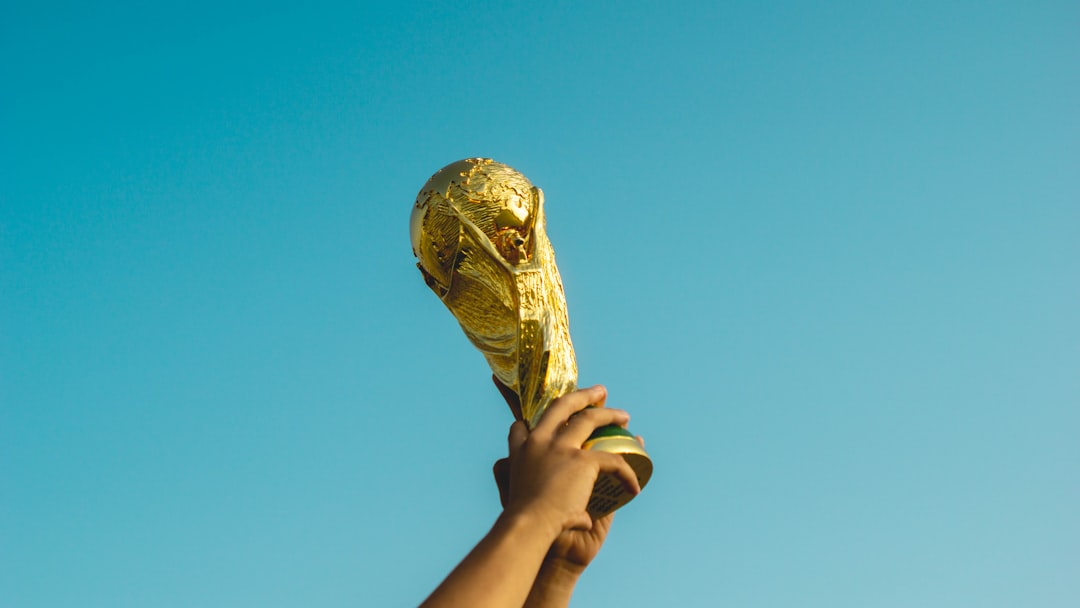
Mastering any competitive event requires understanding its core rhythm, its fundamental ruleset. From a seasonal ladder reset to a major expansion drop, timing is everything. The FIFA World Cup, the largest single-sport “global event” on the planet, is no different. To truly follow it, you need to understand its tempo. So, how often is the World Cup? The simple answer is every four years. But for a strategist, that’s just the opening move. This tactical playbook will break down the entire four-year game loop, from the qualification grind to the final boss battle, giving you the intel needed to master the cycle.
Understanding the Core Mechanic: How Often Is the World Cup Held?
The World Cup operates on a consistent quadrennial schedule. This four-year interval is the foundational rule that dictates the entire flow of international football. It’s not a quick-play match; it’s a long-form campaign where the stakes build over thousands of days, culminating in a month-long finale.
The Four-Year Cycle: The Game’s Fundamental Cooldown
The decision to hold the tournament every four years is a core design choice based on several key factors. First is the sheer logistical scale. Hosting the World Cup is a monumental task requiring years of infrastructure development, from stadiums to transportation. It’s a “world event” that a host nation’s entire server has to prepare for.
Second, the “pre-game” is just as important as the main event. The two to three years leading up to a World Cup are dedicated to a global qualification process. Hundreds of national teams across six continental confederations must battle through their own regional tournaments to earn one of the coveted spots. This lengthy grind ensures that only the most prepared and skilled teams make it to the final bracket.
Finally, the four-year gap builds prestige. Unlike an annual championship, the rarity of the World Cup elevates its importance. Winning it is the ultimate achievement, a legendary-tier drop that defines careers and cements a nation’s legacy in the game’s history.
A Brief History of the World Cup’s Timing
This four-year rhythm has been in place since the inaugural tournament in 1930. The only major disruption was a 12-year period of “server downtime” between 1938 and 1950 due to World War II. Aside from that significant interruption, the game’s clock has ticked reliably every four years.
This consistency has allowed for incredible narratives and player arcs to develop. We see players peak for one tournament, enter another as a veteran leader, or miss their prime window entirely. This long-term cycle is part of the strategic fabric of the event itself, influencing team-building and national footballing philosophies for years at a time.
The World Cup “Game Loop”: A Four-Year Strategic Walkthrough
Viewing the World Cup as a single, month-long event is a rookie mistake. A true strategist understands that it’s a multi-phase campaign that spans the full four years. Here is the step-by-step walkthrough of the entire game loop, from one final whistle to the next.
Phase 1: The Qualification “Prequel” (Years 1-3)
The moment a World Cup champion is crowned, the timer resets, and the prequel campaign for the next tournament begins. This phase is a sprawling, global grind where nations compete within their continental confederations (the game’s “server regions”) to qualify.
- UEFA (Europe): A highly competitive region with a complex group and playoff structure.
- CONMEBOL (South America): A brutal round-robin league where every team plays each other twice.
- CONCACAF (North America, Central America, Caribbean): A multi-stage process that tests teams against a wide variety of skill levels.
- AFC (Asia): A grueling, multi-round qualification path.
- CAF (Africa): A high-stakes, often unpredictable tournament structure.
- OFC (Oceania): The region’s winner must typically face a team from another confederation in an inter-continental playoff for a single spot.
Strategic Importance: This phase is crucial for talent-spotting and meta-analysis. Watching how teams perform in the qualification grind reveals their core strategies, key players, and potential weaknesses long before the main event begins.
Phase 2: The Main Event Draw: “Seeding and Brackets”
Approximately six months before the tournament, the Final Draw takes place. This is the moment the brackets are set. The qualified teams are sorted into four “pots” based on the FIFA World Rankings. Pot 1 contains the host nation and the highest-ranked teams, who are treated as the “top seeds.”
The draw then places one team from each pot into a group. The goal of this mechanic is to create balanced groups, but inevitably, the RNG (Random Number Generation) of the draw creates a “Group of Death”—a group with an unusually high concentration of top-tier teams. Analyzing the draw is the first step in plotting a team’s path to victory.
Phase 3: The Group Stage “Early Game”
The tournament proper begins with the group stage. The 32 teams (soon to be 48) are split into eight groups of four. In this phase, each team plays the other three teams in its group once in a round-robin format.
The scoring mechanic is simple:
- Win: 3 points
- Draw: 1 point
- Loss: 0 points
The top two teams from each group advance to the next phase. The key tie-breaker mechanic is goal difference (goals scored minus goals conceded), followed by total goals scored. This means aggressive, high-scoring play is often rewarded over purely defensive tactics.
Phase 4: The Knockout Stage “Endgame”
This is where the tournament enters its “permadeath” mode. From the Round of 16 onwards, every match is a single-elimination contest. Win and you advance; lose and you’re out. There are no second chances.
If a match is tied after the standard 90 minutes of play, it goes into a 30-minute period of extra time. If the score is still level after extra time, the outcome is decided by a penalty shootout—a high-pressure “minigame” that tests player composure and goalkeeping skill. This is the ultimate test, where a single mistake can end a four-year journey.
How Upcoming “Patches” Will Change How We Experience the World Cup
Like any long-running game, the World Cup receives periodic “balance patches” and rule updates. The upcoming cycle features one of the most significant changes in the tournament’s history, fundamentally altering the strategic landscape.
The 2026 Expansion: A Major “Balance Update”
The 2026 World Cup, co-hosted by the USA, Canada, and Mexico, will see the tournament expand from 32 teams to 48. This is the biggest format change in decades and will have massive tactical implications.
The initial plan for a format of 16 groups of three was scrapped due to concerns about collusion in the final group matches. The confirmed format is now 12 groups of four teams. The top two teams from each group will advance, along with the eight best third-placed teams. This creates a new Round of 32, adding an extra knockout match for every team that reaches the final.
Strategic Impact: This “patch” opens up the game to more nations, creating more diverse matchups. However, it also lengthens the tournament and potentially dilutes the elite competition in the early stages. The new rule allowing some third-place teams to advance changes the calculus for the group stage; a single win and a draw might be enough to survive, altering risk/reward decisions for coaches.
The Rumored Biennial World Cup: A Controversial “Game Mode”
In recent years, FIFA has floated a controversial proposal to change the event’s core frequency, asking: what if we changed how often the World Cup is held to every two years? This proposed “game mode” would double the number of tournaments.
Proponents argued it would give more nations a chance to host and participate, generating more revenue for football development. However, the proposal was met with massive resistance from powerful confederations like UEFA (Europe) and CONMEBOL (South America), as well as player unions.
The primary concerns were player burnout, the devaluation of the tournament’s prestige, and the logistical conflict with existing continental championships like the Euros and Copa América. As of now, this proposal has been shelved, and the four-year cycle remains the established ruleset for the foreseeable future.
Your Tactical Playbook: How to “Win” the World Cup Cycle as a Fan
For a fan, “winning” means being the most prepared, knowledgeable, and engaged spectator. It means winning your fantasy league, dominating prediction brackets, and understanding the strategic nuances behind every match. This requires a plan.
Preparation: Your Pre-Tournament Loadout
Before the first whistle, you need to equip the right gear and do your research. Don’t just show up on match day and expect to understand the meta.
- Select Your Faction(s): Pick a primary team to support, but also identify a few dark horses or teams with interesting playstyles to track. This broadens your understanding of the field.
- Study the Meta: In the months leading up to the event, research team rosters, analyze their performance in qualification, and read up on the tactical philosophies of their managers. Are they a high-pressing team or a defensive counter-attacking squad?
- Join a Guild: The best way to test your knowledge is to join a fantasy league or a prediction pool with friends or colleagues. This adds a competitive layer and forces you to think critically about every single match.
- Map the Schedule: The World Cup is a marathon. Get the official match schedule, convert kickoff times to your local time zone, and identify the must-see matches versus the ones you can catch on highlights.
Execution: A Step-by-Step Guide to Following the Tournament
Once the tournament begins, follow this operational sequence to maximize your experience and analytical edge.
- Analyze the Group Stage Draw: As soon as the groups are announced, identify the “Group of Death” and look for potential upset matchups. Determine each team’s likely path out of the group and into the knockout bracket. This is your initial strategic forecast.
- Track Early Game Performance: During the first two matches of the group stage, don’t just watch your favorite team. Monitor key players, emerging tactical trends, and surprise results across all groups. This intel is crucial for adjusting your predictions for the knockout rounds.
- Optimize Your Bracket for the Knockouts: After the group stage concludes, the endgame bracket is set. Re-evaluate your initial predictions based on actual performance. Which teams look fatigued? Which teams have found their rhythm? This is where deep analysis pays off.
- Engage with Post-Match Analysis: To truly understand how to win a game at this elite level, you must understand the ‘why’ behind the result. Read tactical breakdowns from expert analysts and watch video reviews. Did a formation change at halftime win the match? Was a key player successfully marked out of the game?
- Prepare for the Final Boss: Before the final match, do a deep dive into the two remaining teams. Analyze their head-to-head history, tactical matchups (e.g., one team’s strong wing play versus the other’s weak full-backs), player fitness, and the psychological pressure. Your preparation is complete.
FAQ: Answering Your Core Questions on World Cup Frequency
Why is the World Cup every four years and not annually?
The four-year cycle is essential for several reasons. Logistically, hosting such a massive global event requires years of planning and construction. Competitively, it allows for a two-year global qualification process involving over 200 countries. Finally, the rarity adds to the tournament’s immense prestige, making it the most coveted trophy in all of sports.
Has the World Cup always been every four years?
Yes, the quadrennial cycle has been the standard since the first tournament in 1930. The only exception was a 12-year gap between the 1938 and 1950 tournaments, which were canceled due to World War II and its aftermath. Outside of that major global conflict, the four-year rhythm has been unbroken.
How often is the Women’s World Cup?
The FIFA Women’s World Cup follows the exact same four-year cycle as the men’s tournament. However, the events are staggered to give each one its own spotlight. For example, the men’s tournament was in 2022, while the women’s tournament was held in 2023. The next men’s event is in 2026, and the next women’s event will be in 2027.
Will the World Cup ever be held every two years?
While FIFA formally proposed a biennial World Cup, the idea faced overwhelming opposition from key stakeholders, including Europe’s UEFA, South America’s CONMEBOL, major domestic leagues, and player representative groups. The primary concerns were player welfare, the oversaturation of the football calendar, and the potential devaluation of the tournament’s special status. For the near future, it is highly unlikely this change will be implemented, and the four-year cycle will remain.
The four-year cycle of the World Cup is not an arbitrary number; it is the core mechanic that makes the event what it is. It allows for epic qualification sagas, ensures logistical feasibility, and builds a level of prestige that an annual event could never achieve. Understanding this rhythm is the first and most critical step in moving from a casual viewer to a true student of the game. You now have the tactical playbook. The countdown to 2026 is already underway.
Be sure to comment below if this article helped you!
Leave a Reply