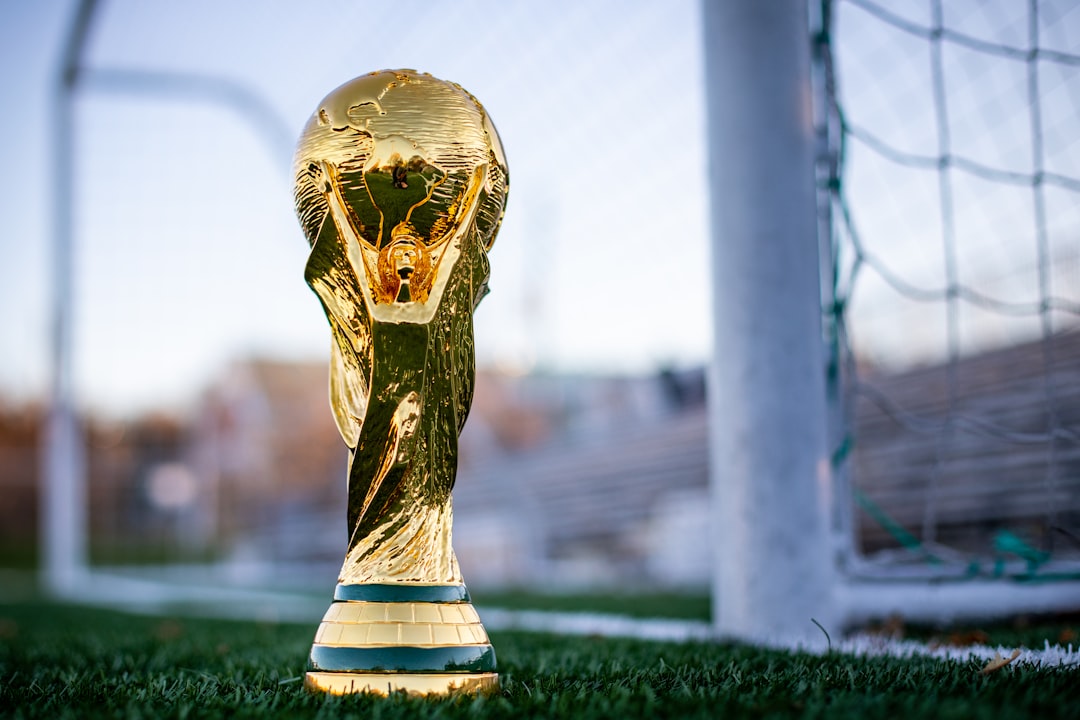
The FIFA World Cup is the ultimate tournament in international football, a month-long gauntlet where national teams battle for global supremacy. For the casual observer, the structure can seem as complex as a multi-layered strategy game with intricate rules and shifting objectives. Understanding how does the world cup work is the first step to appreciating the tactical depth, the high-stakes decisions, and the strategic planning that defines a champion.
This guide breaks down the World Cup format into a clear, actionable playbook. We’ll dissect the mechanics from the grueling qualification phase to the final, winner-take-all match. Consider this your tactical briefing for the biggest sporting event on the planet.
Objective: The Ultimate Victory Screen in Global Football
The primary objective is simple and singular: win the final match and lift the solid-gold FIFA World Cup Trophy. Achieving this goal crowns a national team as the world champion for the next four years, an honor that represents the pinnacle of the sport.
However, the tournament is a series of escalating objectives. The immediate goal is always to survive the current phase—to gather enough points to escape the Group Stage or to win a single do-or-die match in the Knockout Stage. A team’s strategy must adapt to these shifting short-term goals to have a shot at the ultimate prize.
Preparation: The Path to Qualification
Before the main event even begins, a global “pre-game” campaign rages for nearly three years. This is the qualification phase, where over 200 nations are whittled down to the final tournament roster. Entry isn’t guaranteed; it must be earned.
Key Requirement: FIFA Membership
- To even attempt to qualify, a country’s football association must be one of the 211 members of FIFA (Fédération Internationale de Football Association), the sport’s global governing body.
- The host nation(s) traditionally receive an automatic qualification spot, bypassing this entire process.
The Continental Qualifiers: A Multi-Year Gauntlet
FIFA delegates the qualification process to its six continental confederations. Think of these as regional servers, each with a unique tournament ladder and a specific number of qualification slots for the final tournament. The competition in each confederation is fierce, often involving complex group stages and playoff rounds.
- AFC (Asia): Includes 47 member associations.
- CAF (Africa): The largest confederation with 54 members.
- CONCACAF (North America, Central America, and the Caribbean): Comprises 35 members.
- CONMEBOL (South America): A highly competitive confederation with only 10 members.
- OFC (Oceania): The smallest confederation with 11 members.
- UEFA (Europe): Features 55 members, including many of the world’s top-ranked teams.
The number of slots allocated to each confederation can change between tournaments, reflecting the relative strength and number of teams in each region. For the 2026 World Cup, the field has expanded to 48 teams, granting more slots to each confederation and introducing an inter-confederation playoff tournament for the final spots.
The Final Draw: Setting the Brackets
Once the final teams are confirmed, the Final Draw takes place. This event is a critical strategic component that sets the stage for the entire tournament. Teams are “seeded” into four pots based on the FIFA Men’s World Rankings. Pot 1 contains the host(s) and the highest-ranked teams, Pot 2 the next highest, and so on.
The draw then places one team from each pot into a group. The primary rule is that, with the exception of Europe, teams from the same confederation cannot be drawn into the same group. This mechanic ensures a diverse mix in each group and prevents the world’s elite teams from eliminating each other in the opening phase.
The Strategy: How Does the World Cup Work Step-by-Step
With the brackets set, the main tournament begins. The modern World Cup format is a two-phase operation: a round-robin Group Stage followed by a single-elimination Knockout Stage. The 2026 tournament introduces a new structure to accommodate the expanded 48-team field.
Phase 1: The Group Stage – Survival of the Fittest
The opening phase is a test of consistency and tactical acumen. The 48 teams are divided into 12 groups of four. The format is a round-robin, where each team plays one match against the other three teams in its group.
The Point System Mechanic
Performance in the Group Stage is measured by a simple point system. The objective is to accumulate as many points as possible across the three matches.
- Win: 3 points
- Draw: 1 point
- Loss: 0 points
A team that wins all three of its matches finishes with a perfect 9 points, guaranteeing passage to the next round. Conversely, a team that loses all three matches is eliminated with 0 points.
Advancement Conditions (2026 Format)
This is where the strategy for the new 48-team format becomes critical. Advancing from the group is no longer a simple top-two affair.
- The top two teams from each of the 12 groups automatically advance to the Knockout Stage. This accounts for 24 teams.
- The remaining 8 spots are filled by the eight best third-placed teams from across all 12 groups.
This new rule adds a complex layer of meta-strategy. A team in third place with 3 or 4 points must wait for all other group matches to conclude to see if their record is strong enough to advance. This makes goal difference a massively important secondary objective.
Tie-Breaker Protocols: The Fine Print
When two or more teams in the same group finish with the same number of points, a series of tie-breaker rules are applied in a specific order to determine their rank. Understanding this hierarchy is crucial.
- Overall Goal Difference: The first and most important tie-breaker. This is a team’s total goals scored minus its total goals conceded across all three group matches.
- Overall Goals Scored: If goal difference is equal, the team that scored more goals advances.
- Head-to-Head Result: If teams are still tied, the result of the match played between those specific teams is considered (points, then goal difference, then goals scored in that match).
- Fair Play Points: A disciplinary record is used as a final resort. Points are deducted for cards received:
- Yellow card: -1 point
- Indirect red card (from two yellows): -3 points
- Direct red card: -4 points
- Yellow card followed by a direct red card: -5 points
The team with the higher Fair Play score (fewer deductions) advances.
- Drawing of Lots: If all else fails, a random draw by a FIFA official determines which team advances. This is the last resort and a scenario every team desperately wants to avoid.
Phase 2: The Knockout Stage – No Second Chances
Once the 32 surviving teams are confirmed, the tournament’s entire dynamic shifts. The margin for error disappears. The Knockout Stage is a single-elimination bracket where every match is a final. Win and advance; lose and go home.
Round of 32
The 48-team format introduces a new Knockout round: the Round of 32. The bracket is pre-determined, mapping out a team’s potential path to the final. Matchups are typically structured to reward group winners, who are often paired against third-placed teams, while runners-up face each other.
Round of 16, Quarter-Finals, and Semi-Finals
The winners of the Round of 32 progress to the Round of 16. This is followed by the Quarter-Finals (eight teams remaining) and the Semi-Finals (four teams remaining). The tension and stakes escalate with each round as the dream of the final comes closer to reality.
How to Win a Game in the Knockout Stage
Unlike the Group Stage, draws are not an option in the Knockout Stage. There must be a winner. If a match is tied after the standard 90 minutes of regulation time plus stoppage time, the following procedures are initiated.
- Extra Time: Two additional 15-minute periods are played in their entirety. It is not “sudden death” or “golden goal”—a team that scores early in extra time can still concede an equalizer. Substitutions and player fatigue become critical strategic elements here.
- Penalty Shootout: If the score remains tied after 120 minutes of play, the match is decided by a penalty shootout. Each team selects five players to take penalty kicks against the opposing goalkeeper. The team that scores more goals after five kicks wins. If they are still tied, the shootout continues in a sudden-death format until one team scores and the other misses in the same round.
The Final Two Matches: The Final & Third-Place Play-off
The two winners of the semi-final matches advance to the World Cup Final to play for the trophy. The two losing semi-finalists compete in the Third-Place Play-off, typically held the day before the Final. While considered a consolation match, winning it secures the “bronze medal” and is a matter of national pride.
Common Pitfalls: Why Teams Fail to Advance
Navigating the World Cup requires more than just skill; it demands flawless strategy and execution. Many talented teams are eliminated because they fall into common tactical traps.
- Underestimating the Opening Match: A loss in the first game is a massive blow. It forces a team into a desperate position where they likely need to win their remaining two matches. A draw is manageable, but a win provides a powerful strategic cushion.
- Poor Goal Difference Management: Teams that fail to press their advantage against weaker opponents often regret it. Securing a 4-0 win instead of a 1-0 win can be the difference between advancing and being eliminated on a tie-breaker. Conversely, in a losing effort, preventing a 1-0 loss from becoming a 4-0 blowout is equally vital.
- The “Third-Place” Calculation Trap: With the new 48-team format, playing for a best third-place spot is a dangerous game. Teams might play for a conservative draw when a risky win is what’s needed to secure a high enough point total and goal difference. This requires immense awareness of the standings across all other groups.
- Exhaustion and Squad Depth: The tournament is a grueling marathon of seven matches in one month for the finalists. Teams that lack a deep bench and cannot effectively rotate players to manage fatigue and injuries will eventually be outrun and outplayed by fresher opponents.
- Losing the Penalty Shootout Lottery: A penalty shootout is a high-pressure test of skill and mental fortitude. It’s a mini-game where preparation matters. Teams that haven’t rigorously practiced their penalty kicks or prepared their goalkeepers for this scenario often crumble under the pressure.
FAQ: Deconstructing the World Cup Ruleset
How many teams are in the World Cup?
Starting with the 2026 FIFA World Cup, the tournament will feature 48 teams. This is an expansion from the 32-team format that was used from 1998 through the 2022 tournament. The primary reason for this change was to increase global participation, allowing more nations the opportunity to compete on the world’s biggest stage.
What is the difference between the World Cup and the Champions League?
The core difference is the participants. The FIFA World Cup is a tournament for national teams, where players represent their country of citizenship (e.g., Brazil, Germany, Argentina). It is held every four years. The UEFA Champions League, by contrast, is an annual competition for elite professional club teams from Europe (e.g., Real Madrid, Liverpool, Bayern Munich). Players in the Champions League can be of any nationality and play for the club that employs them.
What are Fair Play points and how do they work?
Fair Play points are a tie-breaking mechanism used in the Group Stage as a last resort before a drawing of lots. It rewards the team with the best disciplinary record. Points are deducted based on yellow and red cards accumulated by a team’s players during the Group Stage. The system is: a yellow card costs 1 point; an indirect red card (two yellows) costs 3 points; a direct red card costs 4 points; and a yellow card followed by a direct red card costs 5 points. The team with the highest score (i.e., the fewest deductions) wins the tie-breaker.
Why is the World Cup held every four years?
There are several logistical and traditional reasons for the four-year cycle. First, the qualification process is a massive undertaking, involving over 200 countries playing matches over a two-to-three-year period. Second, host nations require significant time to build and prepare the necessary infrastructure, such as stadiums and transportation. Finally, the four-year gap preserves the prestige and rarity of the event, making each tournament a special and highly anticipated global spectacle.
The World Cup is a masterclass in tournament design, blending league-style play with high-stakes elimination drama. From the global qualification marathon to the final, heart-stopping penalty shootout, every rule and phase is designed to identify a single, deserving champion. By understanding these mechanics, you can watch the tournament not just as a fan, but as a strategist, appreciating the tactical choices that separate victory from defeat.
Be sure to comment below if this article helped you!
Leave a Reply