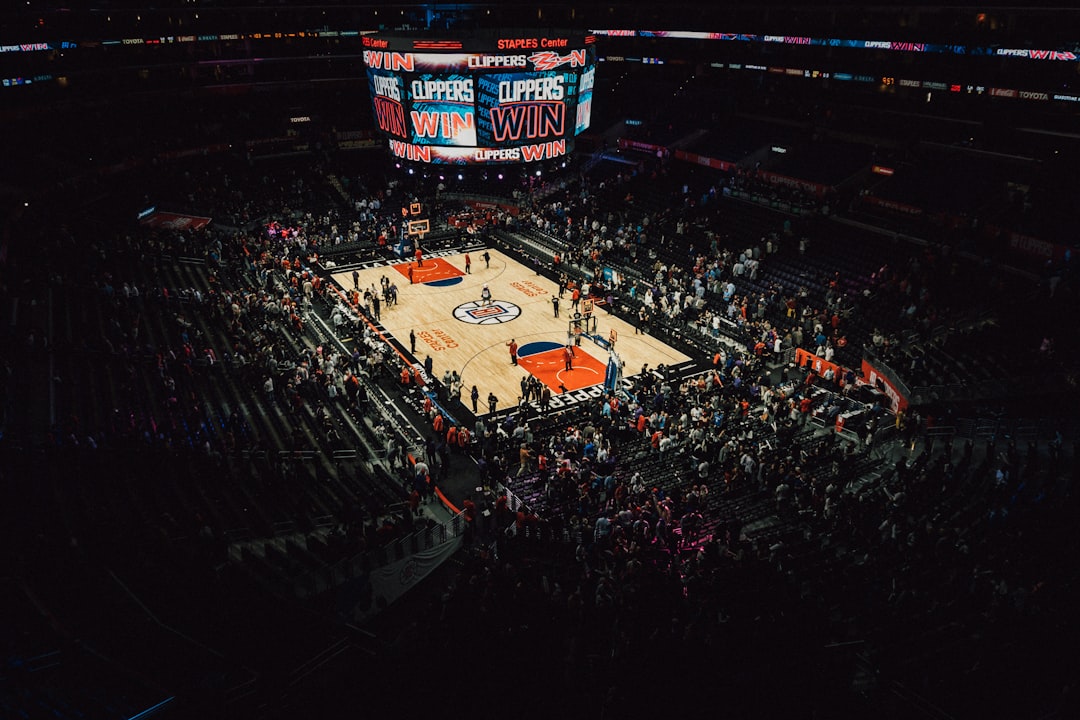
You’re asking the question: did the knicks win? In the world of competitive gaming, that answer depends entirely on the player holding the controller. The New York Knicks in NBA 2K24, particularly on higher difficulties, are a formidable digital opponent engineered to test your tactical discipline. This guide is your playbook to ensure that when the final buzzer sounds in your game, the answer to that question is a definitive “no.” We’re not here to talk about real-world games; we’re here to give you the strategy to secure the victory screen.
This walkthrough provides a comprehensive breakdown for defeating the Knicks on Hall of Fame difficulty, focusing on the game’s mechanics as of the latest patch. We will dissect their AI tendencies, provide a step-by-step game plan, and equip you with the knowledge to consistently dismantle their strategy. Forget luck; victory is about execution.
Understanding the AI Opponent: Why Did the Knicks Win Your Last Match?
Before you can execute a winning strategy, you must understand the opponent’s programming. The NBA 2K24 Knicks are not just a collection of player ratings; their AI is built around specific, repeatable patterns. Losing to them is rarely a fluke. It’s typically a failure to recognize and counter these core tendencies.
The Knicks’ AI prioritizes the offensive creation of Jalen Brunson, the physical post-play and mid-range game of Julius Randle, and relentless offensive rebounding from centers like Mitchell Robinson and Isaiah Hartenstein. They thrive on wearing you down, forcing turnovers through aggressive on-ball defense, and capitalizing on second-chance points. If you found yourself asking “did the Knicks win again?” after a match, it’s likely you were beaten in one of these key areas.
Objective: Secure a Decisive Victory
Our goal is not just to win, but to control the game from start to finish on Hall of Fame difficulty. A “win” in this context means holding the Knicks below their average points per game, winning the rebounding battle, and finishing with a positive assist-to-turnover ratio. This is how to win a game in a way that is repeatable and not reliant on a lucky shooting streak.
Prerequisites: The Pre-Game Loadout
Entering the match unprepared is the first step toward defeat. Your strategy begins in the pre-game menus. Proper setup is non-negotiable for executing the game plan effectively.
- Team Selection: Choose a team with a top-tier perimeter defender to shadow Jalen Brunson (e.g., Boston Celtics with Jrue Holiday, Minnesota Timberwolves with Jaden McDaniels). You also need a strong interior defender to handle the Knicks’ bigs.
- Controller Settings: Navigate to Controller Settings. Set Defensive Assist Strength to 15-25. This provides a slight magnetic pull toward the ball-handler without the AI taking full control and pulling you out of position. Ensure “Who To Guard” is turned ON to maintain clear defensive assignments.
- Coaching Settings: In the Coaching menu, access “Coach Settings.” Turn Adaptive Coaching Engine OFF. The ACE can make unpredictable automatic adjustments that may conflict with our targeted strategy. You need to be in full manual control.
- Defensive Matchups: Before tipping off, go to “Gameplan” and then “Defensive Settings.” Manually assign your best perimeter defender to Jalen Brunson. Do not let the CPU handle this assignment. Set on-ball pressure for him to “Tight” and off-ball to “Deny.” For Julius Randle, set the strategy to “Force Jumper.”
The Tactical Playbook: A Step-by-Step Guide to Victory
This is the core execution phase. We will break down the game quarter by quarter, outlining the specific actions required to build and maintain a lead. Follow these steps methodically. Every possession matters against a top-tier AI.
Phase 1: The First Quarter – Establishing Defensive Dominance
The first six minutes are about setting the tone. The AI will test your perimeter defense immediately with a heavy dose of Jalen Brunson. Your objective is to frustrate him and prevent the Knicks from establishing an offensive rhythm.
- Control Your Primary Defender: Manually control the player you assigned to Jalen Brunson. Do not switch off him. Your goal is to stay between him and the basket at all times.
- Force Him Left: The Brunson AI has a higher probability of executing effective dribble moves and pull-up jumpers when going to his right. Use the left analog stick to shade his body, overplaying his right side and forcing him to drive or dribble left. This disrupts his primary offensive script.
- Navigate the High Screen: The Knicks will run a constant stream of pick-and-rolls with Brunson as the ball handler. When the screen comes, use the “Go Over” mechanic. Fight over the top of the screen to stay attached to Brunson. Switching will create a mismatch that the AI is programmed to exploit instantly.
- Pace Your Offense: On offense, do not rush. Walk the ball up the court. The goal is to limit the total number of possessions in the game, which reduces the AI’s chances to go on scripted runs. Aim to take your shot with 8 seconds or less on the shot clock.
- Initial Offensive Set: Run a “5-Out” or “4-Out 1-In” freelance offense. This spacing pulls the Knicks’ strong interior defenders away from the basket, opening up driving lanes. Your first priority is a high-percentage shot in the paint to test their interior rotations.
By the end of the first quarter, you should have forced Brunson into several tough, contested shots. The score may be close, but you have successfully dictated the pace and style of the game.
Phase 2: The Second Quarter – Exploiting the Bench Unit
When the AI begins to sub in its second unit, your strategy must shift. The Knicks’ bench is defensively weaker, presenting a key opportunity to build your lead. This is where your offensive execution becomes paramount.
- Identify the Mismatch: As soon as the AI makes substitutions, pause the game and check the matchups. Identify the weakest defender on the floor for the Knicks. This is now your primary target on every offensive possession.
- Run Pick-and-Rolls at the Mismatch: Use the player being guarded by the weak defender as the screener in a pick-and-roll. For example, if a slow-footed center is switched onto your speedy guard, attack him relentlessly. The AI struggles to recover in these scrambled situations.
- Attack the Closeouts: After running a few pick-and-rolls, the AI defense will begin to rotate and scramble. Use a “pass fake” to bait a defender into jumping, then drive past them into the open lane. Understanding how to win a game is about creating and then exploiting these small advantages.
- Maintain Defensive Intensity: Do not relax on defense just because the opponent’s starters are out. The bench unit will try to push the pace. Your priority remains the same: prevent easy baskets and secure the defensive rebound. Box out on every single shot.
Your goal is to enter halftime with a lead of 8-12 points. This buffer is critical for weathering the inevitable AI comeback attempt in the third quarter.
Phase 3: The Third Quarter – Weathering the “CPU Comeback” Script
The third quarter is infamous in sports gaming for the “rubber band AI” or scripted momentum swings. The CPU will make tougher shots, get more favorable foul calls, and increase its defensive intensity. Do not panic. This is an expected part of the challenge.
- Slow the Game to a Crawl: This is the most important step. Use the entire shot clock on every single possession. Do not take any transition or semi-transition shots unless it is a completely uncontested layup or dunk. Shortening the game is your best defense against a CPU run.
- Focus on Free Throws: Shift your offensive focus from jump shots to attacking the basket. Your goal is to draw fouls and get to the free-throw line. This accomplishes three things: it stops the clock, it gets their key players in foul trouble, and it provides high-percentage scoring opportunities.
- Use Your Timeouts Strategically: If the Knicks go on a 6-0 run, call a timeout immediately. Do not wait for it to become a 10-0 run. This serves to break the AI’s programmed momentum. Use it to calm the game down and set up a specific play.
- Stick to the Defensive Gameplan: It is tempting to start over-helping or double-teaming when the AI hits a few tough shots. Do not. This is exactly what the AI wants. Stick to your assignments, stay in front of your man, and trust that their contested shot percentage will eventually regress to the mean.
Surviving the third quarter with your lead intact, even if it has shrunk slightly, is a massive victory. You have weathered their best punch and are now in a position to close out the game.
Phase 4: The Fourth Quarter – Closing the Deal
The final quarter is about flawless execution and clock management. You have the lead; now you must protect it with intelligent, disciplined play.
- Run the Clock: On offense, do not shoot until there are under 5 seconds on the shot clock. Use dribble moves and pass the ball around the perimeter to burn as much time as possible on each possession.
- Milk the Pick-and-Roll: Continue to run the high pick-and-roll. It is the safest and most reliable play in the game. It forces the defense to react and will either create an open look for the roller, the ball handler, or a shooter on the wing as the defense collapses.
- Secure Every Rebound: In the final minutes, every possession is critical. When a shot goes up on either end, your sole focus should be on boxing out your man and securing the rebound. Giving up an offensive rebound for a second-chance bucket can be a back-breaking mistake.
- Smart Fouling (If Necessary): If you have a lead of 4 points or more with under 24 seconds to go, you can choose to foul their worst free-throw shooter as soon as they inbound the ball. This prevents them from attempting a game-tying three-pointer. Use this tactic judiciously.
By following these steps, you drain the clock, limit their opportunities, and secure the win. The post-game analysis will be clear, and the question of “did the Knicks win” will have the answer you engineered.
Common Pitfalls: A Post-Mortem on Why Players Lose
Even with a solid game plan, small mistakes can compound into a loss. Understanding these common errors is key to avoiding them in your own gameplay.
- Reaching for Steals: The Hall of Fame AI is designed to punish players who constantly spam the “steal” button. This will result in a reach-in foul almost every time, putting your key defenders in foul trouble and giving the Knicks free points. Only attempt a steal if you have a clear, unimpeded lane to the ball.
- Ignoring Offensive Rebounds: Players often leak out in transition after a shot, hoping for a fast break. The Knicks’ AI, particularly with Mitchell Robinson, is programmed to crash the offensive glass. If you don’t have all five players committed to rebounding, you will give up countless second-chance points.
- Forcing Bad Shots Early in the Clock: Impatience is the AI’s greatest ally. Taking a contested, low-percentage shot with 18 seconds on the shot clock is a wasted possession. It fuels their transition game and lets their defense rest. Discipline is mandatory.
- Failure to Adapt Matchups: If the AI puts Julius Randle at center in a small-ball lineup and you fail to adjust, he will dominate your traditional, slower center. You must be willing to pause and adjust your own lineup and defensive settings to counter the AI’s moves.
FAQ: Mastering the Knicks Matchup
Here are answers to some of the most common questions players have when trying to defeat this tough NBA 2K24 opponent.
What is the single best team to use against the Knicks in NBA 2K24?
The Boston Celtics are arguably the ideal choice. They possess the perfect combination of personnel to execute our strategy. Jrue Holiday and Derrick White are elite perimeter defenders to harass Jalen Brunson, while Al Horford and Kristaps Porziņģis provide the size and defensive versatility to handle the Knicks’ frontcourt. Offensively, their five-out spacing with elite shooters at every position makes it very difficult for the Knicks’ AI to guard.
How do I consistently stop the Jalen Brunson and Julius Randle pick-and-roll?
This requires precise user control. As the on-ball defender on Brunson, you must “Go Over” the screen. Simultaneously, you need to set the screen defender’s setting to “Soft Hedge” or “Catch Hedge.” This means the big defender will briefly step out to impede Brunson’s path before recovering to his man (Randle). This momentary delay gives you, the user, time to recover to Brunson after navigating the screen. It prevents the easy drive, the open three for Brunson, and the uncontested roll for Randle.
Did the Knicks win because of ‘rubber band’ AI or am I missing a key mechanic?
While “rubber band” AI or scripted momentum certainly exists, especially in the third quarter, it’s rarely the sole reason for a loss. It’s an amplifier, not a cause. The AI’s comeback script preys on user error. It thrives when you get frustrated, abandon your game plan, take quick shots, and commit unnecessary fouls. Acknowledging the script exists is the first step; the key is to counter it with extreme discipline, slowing the game down and sticking to the high-percentage plays outlined in the strategy guide. The AI didn’t win; the player lost their composure.
What are the most effective offensive plays to run against the Knicks’ defense?
Beyond the basic pick-and-roll, a “Horns Flare” play is highly effective. This set positions shooters in the corners and has a big man set a screen for another shooter to “flare” out to the wing for an open shot. The Knicks’ AI can get confused by this off-ball action, often leading to a wide-open three-pointer. Another effective play is a simple “Isolation” for a quick, elite guard against one of their slower bigs if a defensive switch occurs.
Defeating a top-tier AI like the NBA 2K24 Knicks is a challenge of strategy and discipline, not just stick skills. By preparing correctly, understanding the AI’s tendencies, and executing a methodical, possession-by-possession game plan, you remove luck from the equation. You dictate the terms of engagement and control the outcome. With this playbook in hand, you’ll never have to wonder if the Knicks won—you’ll be the reason they lost.
Be sure to comment below if this article helped you!
Leave a Reply