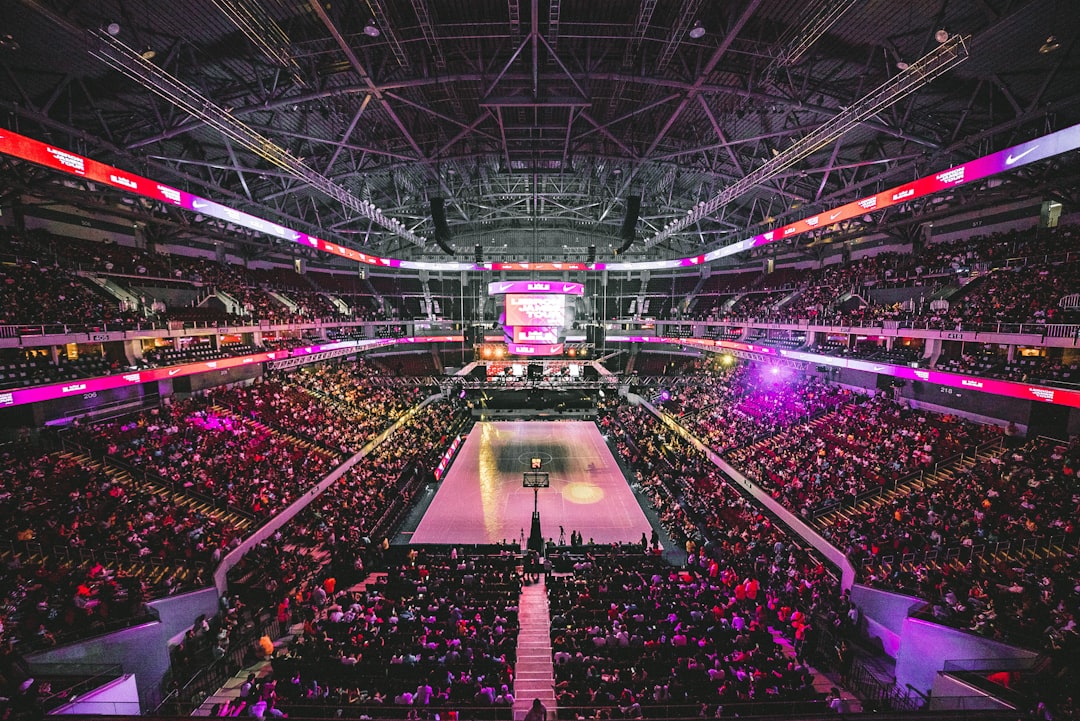
Losing a close nba game on the final possession is one of the most frustrating experiences in gaming. You executed your game plan, hit tough shots, and played solid defense, only to be undone by a single mistake or a mechanic you didn’t fully understand. The line between a crushing defeat and a satisfying victory is often razor-thin, defined not by luck, but by tactical execution. This guide is your new playbook, designed to transform you from a hopeful player into a dominant force on the virtual court. We will break down the essential strategies, from foundational mechanics to advanced team concepts, giving you the tools to consistently secure the win in NBA 2K24.
Foundational Mechanics: Mastering Your NBA Game Fundamentals
Before you can run complex offensive sets or implement a lockdown team defense, you must have absolute mastery over the core controls. Many players stagnate because they have subtle but significant flaws in their fundamental skills. We’re here to rebuild your game from the ground up, ensuring your foundation is solid enough to build a winning strategy upon.
The Shot Meter and Timing: Your Offensive Bedrock
The single most important offensive skill in any basketball video game is the ability to consistently time your jump shot. In NBA 2K24, this means understanding the shot meter and, more importantly, your player’s unique release animation.
The visual shot cue you select in your settings (e.g., “Push,” “Release”) determines the optimal moment to let go of the shoot button. The “why” behind this is simple: a properly timed shot receives a significant boost to its make-percentage, while a slightly early or late release is heavily penalized, especially on higher difficulty settings or in online play.
- Objective: To achieve a “Green” or “Excellent” release on the majority of your open jump shots.
- Preparation: Go into the “2KU” practice facility or your team’s practice gym. Select your primary scoring player. Go into Controller Settings and experiment with the “Shot Timing Visual Cue” to find what feels most intuitive for you.
- The Strategy:
- Take at least 50 practice shots from a standstill position. Ignore the shot meter itself and focus entirely on your player’s animation. Watch for the moment in the shot that corresponds to your chosen cue (e.g., the ball reaching the peak of its height before the “release”).
- Once comfortable, begin taking shots off the dribble. The timing can be slightly different, so it’s crucial to build this muscle memory.
- Finally, practice catch-and-shoot scenarios. Use the practice facility’s play-calling feature to simulate receiving a pass and immediately going into your shot.
- Common Pitfalls: Watching the meter instead of your player’s hands or the ball. Every player’s jump shot animation is different; relying solely on a universal meter feel will lead to inconsistency.
On-Ball Defense: Clamping Down on Your Opponent
A great offense can win you games, but a lockdown defense wins championships. Effective on-ball defense is about anticipation, positioning, and discipline. The goal is to stay between your opponent and the basket without fouling or giving up an easy lane to the rim.
Using the left stick for positioning and the right stick to contest shots is paramount. The block button should be reserved for clear opportunities at the rim, as overusing it will lead to fouls or put you out of position for a rebound. The “why” here is risk management: a right-stick contest keeps you grounded and ready to react, while a mistimed block attempt is a defensive breakdown.
- Objective: Force the ball-handler into a contested, low-percentage shot or a turnover.
- Preparation: Equip defensive badges like Clamps, Challenger, and Fast Feet on your MyPLAYER. In a team setting, ensure your best perimeter defender is matched up against the opponent’s primary scorer.
- The Strategy:
- Hold the left trigger (L2/LT) to engage a defensive stance when the opponent is dribbling. Do not hold it down constantly, as it will slow your movement. Feather it to stay ready.
- Use the left stick to mirror the ball-handler’s movements. Your goal is to keep your body directly in their path to the hoop.
- When they go up for a shot, move the right stick up to contest. This action minimizes the chance of fouling while still impacting the shot’s success rate.
- Avoid reaching for steals unless the ball is clearly exposed or the opponent is in an animation (like a slow crossover). Spamming the steal button is the fastest way to get fouls and be taken out of the play.
- Common Pitfalls: “Riding” the opponent’s hip instead of staying in front. This allows them to use their momentum to get to the rim. Another common mistake is jumping at every pump fake, which gives them a wide-open shot or lane.
Advanced NBA Game Strategy: How to Dominate in MyCAREER and Online
Once you have the fundamentals down, it’s time to elevate your thinking. Winning consistently in competitive online modes like The City or The Rec requires more than just individual skill. It demands an understanding of team strategy, spacing, and meta-game knowledge. This is where you learn how to beat a game level not as an individual, but as a cohesive unit.
Building an Optimized MyPLAYER: The Meta-Strategy
Your MyPLAYER build is the foundation of your online experience. A poorly constructed player will be a liability, no matter how skilled you are. The current meta in NBA 2K24 heavily favors specialist builds over “do-it-all” types.
The reason for this is the badge system. By concentrating attribute points into specific categories (e.g., maxing out perimeter defense and three-point shooting), you unlock Hall of Fame-tier badges. These top-tier badges provide a significantly greater boost than having dozens of bronze or silver badges spread across all categories.
- Objective: Create a player that excels at a specific role (e.g., 3&D Lock, Playmaking Shot Creator, Interior Finisher) to maximize your impact in a team setting.
- Preparation: Use a separate “builder” tool online before spending your VC. Plan which animation requirements (e.g., 85 Driving Dunk for specific packages) and badge tiers you want to hit.
- The Strategy:
- Define Your Role: Decide what you want your primary function to be. Do you want to be the main ball-handler, the primary spot-up shooter, or the defensive anchor?
- Prioritize Key Attributes: For a popular “3&D Wing” build, you would prioritize raising your Three-Point Shot, Perimeter Defense, and Steal attributes first. Physical attributes like Speed, Acceleration, and Stamina are universally crucial.
- Sacrifice Weaknesses: To get the attributes you need, you must sacrifice others. A 3&D Wing does not need high Post Control or Interior Defense. Be decisive about what your build doesn’t do.
- Test the Build: Before finalizing, the game allows you to test your build in a scrimmage. Use this to ensure the player’s movement and animations feel right to you.
- Common Pitfalls: Trying to make a player who is good at everything. This results in a player who is great at nothing and lacks the high-tier badges needed to compete against optimized builds.
Offensive Scheme: Spacing and Ball Movement in your NBA Game
The biggest mistake made by casual teams online is a lack of spacing and ball movement. One player endlessly dribbling while four others stand still is a recipe for a stagnant offense and a quick loss. A successful offense uses player movement and passing to create open looks.
The core concept is “5-Out” or “4-Out, 1-In,” where players are positioned around the perimeter to pull defenders away from the paint. This creates wide-open driving lanes and forces the defense into long rotations, which inevitably leads to a breakdown and an open shooter.
- Objective: To create high-quality shots through team-oriented basketball rather than one-on-one “hero ball.”
- The Strategy:
- Establish Spacing: Immediately after crossing half-court, players without the ball should move to the corners and the wings (the “hash”). This naturally stretches the defense.
- Initiate with Action: The point guard should initiate the offense not by dribbling in place, but with an action like a pick and roll or a hand-off.
- Drive and Kick: When a player drives to the basket, they must read the defense. If a defender collapses into the paint to help, the driver’s job is to pass (“kick”) the ball out to the now-open teammate on the perimeter.
- Make the Extra Pass: If the defense rotates quickly to cover the first pass, the player who receives the ball should immediately look to make a second “extra pass” to the next open man. This “good to great” passing is what dismantles elite defenses.
- Common Pitfalls: Over-dribbling, forcing a contested shot early in the shot clock, and players without the ball standing still or cutting into driving lanes, which clogs the floor.
MyTEAM Optimization: Building a Winning Squad Without Breaking the Bank
MyTEAM is the ultimate team-building mode, but it can feel overwhelming and expensive. However, with a smart, tactical approach, you can build a highly competitive “No Money Spent” (NMS) squad that can compete with any opponent.
The F2P MyTEAM Grind: A Step-by-Step Guide
The key to a successful F2P MyTEAM experience is efficiency. You must focus your time on the modes and objectives that provide the best rewards, and you must be disciplined with your in-game currency.
The golden rule is to never, ever buy packs with MT (MyTEAM) points. Packs are a gamble. MT should be treated as a surgical tool used in the Auction House to acquire specific players who fit your system. The “why” is pure probability: you get far more value by saving 100,000 MT for a guaranteed top-tier player than by spending it on packs with a low chance of pulling that same player.
- Objective: Assemble a competitive team by maximizing free rewards and making smart investments in the Auction House.
- Preparation: A willingness to play offline modes to build your initial coin stack and player collection.
- The Strategy:
- Complete Domination: The first thing every new MyTEAM player should do is grind through the Domination mode. It rewards you with a large number of players, contracts, and MT points to build your foundation.
- Target Evolution Cards: Focus on acquiring “Evo” cards from challenges and rewards. These are players you can upgrade by completing statistical objectives in-game, effectively giving you free high-tier cards.
- Work the Auction House: Don’t just buy players; learn the market. Look for players with valuable badges added by other users. You can often “snipe” players for less than their value by searching at specific times when fewer people are online.
- Stay on Top of Locker Codes: The developers regularly release free “Locker Codes” on social media that grant packs, currency, or even players. Make it a habit to check for and enter these codes.
- Common Pitfalls: Wasting MT on packs. “Rage-selling” your team after a loss. Overpaying for the newest, most-hyped card when a slightly older, much cheaper card can perform the same role just as effectively.
FAQ: Your Top NBA Game Questions Answered
Navigating the complexities of a modern nba game like NBA 2K24 can lead to many questions. Here are detailed answers to some of the most common queries we see from players looking to improve.
What is the best way to earn VC in NBA 2K24?
Virtual Currency (VC) is essential for upgrading your MyPLAYER. The most consistent and efficient way to earn VC without spending real money is by playing MyCAREER games on a higher difficulty with longer quarter lengths (e.g., 8-10 minutes). Higher difficulty and better in-game performance (getting a high teammate grade) provide VC multipliers. Additionally, completing daily and weekly quests in The City, and signing high-paying endorsements in MyCAREER are crucial for maximizing your income.
How do I stop the “pick and roll spam” in online play?
Defending the pick and roll is a fundamental team skill. First, adjust your defensive settings before the game. Set your on-ball screen and off-ball screen defense to “Go Over” to prevent the ball-handler from getting an open three-pointer. Manually, as the on-ball defender, you must fight over the screen to stay attached to the ball-handler. The player defending the screener needs to “hedge” or “show” briefly to stop the ball-handler’s momentum, then recover to their man as they roll to the basket. It requires practice and coordination with your teammate.
What camera angle is best for an NBA game?
The overwhelming consensus among competitive players is that the 2K camera is the best angle. Use this camera with the zoom pulled all the way out and the height set to maximum. The “why” is that this angle provides the widest possible view of the court. It allows you to see all ten players, making it much easier to read the defense, spot open teammates on the weak side, and see defensive rotations developing before they happen. While broadcast cameras look more realistic, they are a competitive disadvantage.
Why do I keep missing wide-open shots online?
This is a common frustration, and it’s almost always due to one of two factors: server latency or a poor-quality shot selection. Online play has inherent input delay, meaning your shot timing will feel slightly different than it does in offline modes. You must practice online to adjust your muscle memory. Secondly, a shot being “open” doesn’t mean it’s a good shot. If your stamina is low, if you’re fading away unnecessarily, or if you’re shooting from well beyond your player’s comfortable range (even if no defender is near), your make-percentage will drop significantly. Always prioritize balanced, in-rhythm shots.
Mastering the modern nba game is a challenge of mechanics, strategy, and mental fortitude. By breaking down the game into these core components—solid fundamentals, advanced team strategy, and smart meta-game optimization—you can build a comprehensive skill set. This playbook provides the tactical framework for success. Focus on deliberate practice, analyze your mistakes, and always seek to understand the “why” behind every strategic decision. With this approach, you will see your performance improve, and the victory screen will become a familiar sight.
Be sure to comment below if this article helped you!
Leave a Reply