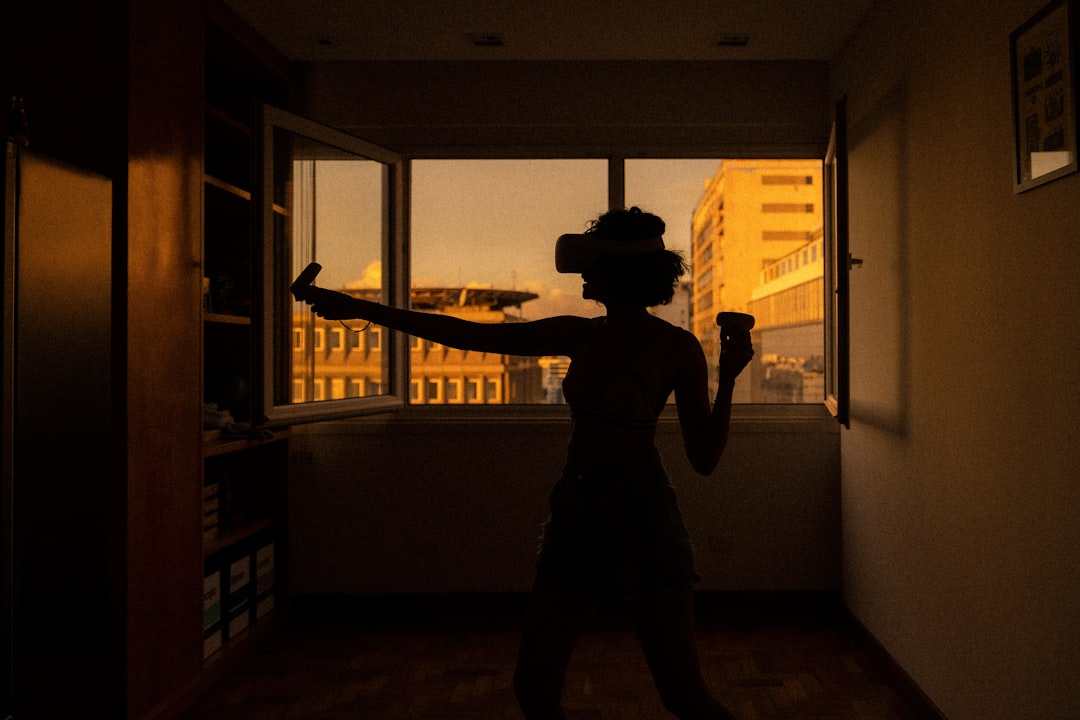
Welcome to the ultimate tactical playbook for Beat Saber. You’ve felt the exhilarating rush of slicing through blocks to a pulsing beat, but now you’re hitting a wall. That Expert+ level seems impossible, your scores have plateaued, and the coveted “SS” rank feels out of reach. You’re not just here to play; you’re here to dominate. This guide will deconstruct the mechanics, refine your technique, and provide the actionable strategies needed to turn you from a survivor into a master of the sabers.
Understanding the Core Objective in Beat Saber
Before you can achieve victory, you must define it. In Beat Saber, “beating” a level isn’t just about reaching the end. True mastery lies in the score, which is a direct reflection of your precision and technique. Your objective is to maximize this score on every single block.
The scoring system is the foundation of your strategy. Each block you successfully cut is worth a maximum of 115 points. This score is broken down into three components:
- Angle of Attack (100 points): This is the largest component of your score. To get the full 100 points, your saber must travel through a 100-degree arc before hitting the block. Think of it as a full, committed swing, not a flick of the wrist.
- Cut Accuracy (15 points): The remaining 15 points are awarded for how close to the center of the block you slice. A perfect slice down the middle maximizes this value.
- Combo Multiplier: A sustained combo multiplies your score, with a cap at 8x. Missing a single block or hitting an obstacle resets this multiplier, making consistency paramount.
Therefore, your primary goal is to hit every block with a full, accurate swing to achieve a 115-point cut, while maintaining an 8x combo. This is the path to the SS rank (90% or more of the total possible score) and the top of the leaderboards.
Preparation: Your Tactical Loadout for Beat Saber
Your performance begins before the first block ever appears. A poorly configured setup is like going into battle with a loose grip on your sword. Optimizing your physical and virtual environment is non-negotiable for high-level play.
Calibrating Your Playspace and Hardware
Your VR system is your weapon. If it’s not perfectly calibrated, your in-game actions will be imprecise. Tracking issues are a common source of missed notes that players often mistake for their own errors.
- Player Height: Use the in-game automatic height detection. If blocks feel consistently too high or low, manually adjust this setting until the blocks are coming at a comfortable chest/head level. This ensures your swings are natural and not strained.
- Lighting: For inside-out tracking headsets like the Oculus/Meta Quest series, ensure your room is well-lit but avoid direct sunlight or reflective surfaces (mirrors, glass). These can interfere with the cameras that track your controllers.
- Clear Your Space: You need enough room for full arm swings without fear of hitting a wall, desk, or ceiling fan. A clear, safe playspace allows you to move with confidence, which is essential for dodging walls and executing wide swings.
Mastering Your Grip
How you hold the controllers directly impacts your speed, accuracy, and stamina. The default grip is fine for beginners, but advanced players often adopt alternative grips to maximize wrist mobility. The wrist is the key to high-speed sections, not the arm.
- Default Grip: The standard way of holding the controller. It’s stable but can limit the extreme wrist flexion needed for Expert+ speeds.
- Claw Grip: A popular alternative where you loop your index and middle fingers through the controller ring and hold the handle with your remaining fingers. This shifts the center of gravity and allows for more leverage and faster wrist snaps. Experiment with this grip on slower songs to see if it improves your speed and reduces arm fatigue.
- Other Grips: The Beat Saber community has developed numerous other grips (e.g., “M-Grip,” “F-Grip”). The goal of any alternate grip is to make the controller feel like a more natural extension of your hand, enabling fluid wrist motion. Find what works for you.
In-Game Settings to Optimize Performance
The game itself offers powerful tools for practice and optimization. Ignoring them is a tactical error. Fine-tune your settings to create the ideal conditions for improvement.
- Controller Settings: In the game’s settings, you can adjust the X/Y/Z position and rotation of your sabers. Small tweaks here can make a huge difference in how natural your swings feel. If you find your cuts are consistently off-center, a slight positional adjustment might be the fix.
- No Fail Modifier: Use this modifier when attempting a song far above your skill level. It allows you to experience the full pattern of a difficult map without being stopped, which is crucial for learning and building muscle memory.
- Static Lights: In the graphics settings, you can choose “Static Lights” or “All Effects Off.” This reduces visual noise and can significantly improve performance on less powerful systems, reducing the chance of lag-induced misses.
The Strategy: How to Beat Any Beat Saber Level
With your setup optimized, it’s time to execute. Beating difficult levels in Beat Saber is a process of deconstructing challenges and systematically training the skills to overcome them. This is your step-by-step playbook for progressing from a struggling player to a confident expert.
Foundational Skills: From Hard to Expert
This is where you build the core competencies that all advanced techniques rely on. Master these fundamentals, and the jump to Expert will feel like a natural next step.
-
Focus on Wrist Movement, Not Arm Swings. The most common mistake beginners make is using their entire arm for every swing. This is slow, exhausting, and results in low scores. Your arms should be used for positioning, but the actual cut should come from a quick, controlled snap of the wrist. This conserves stamina and allows for the speed required to handle dense patterns.
-
Read Patterns, Not Individual Blocks. Don’t look at the block directly in front of you; look further down the track. Your brain will begin to recognize recurring sequences—drum rolls, zig-zags, box streams. By identifying a pattern early, you can execute the required movements automatically instead of reacting to each block one by one. This is the key to sight-reading complex maps.
-
Master the Up-Swing. Many players find up-swings awkward and score poorly on them. This is often because they don’t complete the full swing arc. After a down-swing, ensure you follow through completely before snapping your wrist back up for the next block. A clean up-swing requires the same 100-degree pre-swing arc as a down-swing for maximum points.
-
Utilize Practice Mode. The Practice Mode is the single most important tool for improvement. If a specific section of a song is causing you to fail, isolate it. Slow it down to 75% speed to learn the pattern and movements. Once you can clear it consistently, gradually increase the speed to 85%, 95%, and finally 100%. This methodical approach is exactly how to beat a game level that feels insurmountable; you break it into manageable pieces and master them individually.
Advanced Tactics for Expert+ and Beyond
Expert+ introduces speed and complexity that require more than just the basics. These tactics are designed to refine your technique for maximum efficiency and point-scoring potential.
-
Perfect Your Swing Arc for Maximum Points. To consistently score 115 points, internalize the 100/15 rule. Your swing must be a full 100 degrees before contact and 60 degrees after contact. It’s a wide, deliberate motion. Visualize drawing a large arc with the tip of your saber. This is why large, lazy arm swings fail; they are often too slow to complete the arc on fast songs, whereas a crisp wrist snap can easily achieve the required angle and speed.
-
Navigating Complex Patterns: Cross-Overs and “Tech” Maps. Expert+ maps often feature patterns that require you to cross your arms or make awkward, precise movements (often called “tech” by the community). The key here is to stay relaxed and let your wrists do the work. For cross-overs, don’t move your entire body; simply cross one arm over the other while keeping your posture stable. For tech maps, focus on small, precise wrist rotations rather than large, panicked swings.
-
Conserving Energy for Endurance Maps. Long, high-note-count songs are a test of stamina. Maintain a solid stance with your knees slightly bent, like a martial artist. Keep your core engaged. This stability allows you to generate power from your wrists and core, not just your shoulders, drastically reducing fatigue over a 5+ minute song.
-
Sight-Reading and Reaction Time Drills. To improve your ability to read new maps, you must practice it. Play a wide variety of songs and styles, especially from community mappers (custom songs). Deliberately play songs you’ve never seen before on a difficulty that pushes you. This forces your brain to get better at pattern recognition on the fly, a critical skill for high-level play.
Common Pitfalls: Why Players Fail in Beat Saber
Understanding why you’re failing is just as important as knowing how to succeed. Here are the most common tactical errors that hold players back.
Pitfall 1: The “T-Rex Arms” Problem
This happens when players keep their elbows locked to their sides and try to hit everything with small, underdeveloped wrist flicks or forearm movements. This severely limits range of motion, makes wide patterns impossible, and leads to low angle scores. The solution is to relax, extend your arms for positioning, and use your full range of motion, powered by your wrists.
Pitfall 2: Overgripping the Controllers
A death grip on the controllers is a natural reaction to tense situations, but it’s incredibly counterproductive. It tenses your forearm muscles, restricts wrist flexibility, and leads to rapid fatigue. Hold the controller firmly but not tightly. Your grip should be relaxed enough to allow for fluid, unimpeded wrist rotation.
Pitfall 3: Losing the Rhythm and Panicking
At its core, this is a rhythm game. When a fast, complex pattern appears, the worst thing you can do is panic and start flailing. This breaks your timing and causes you to miss even more. Instead, try to hear the beat in the music. The blocks are almost always mapped to a distinct sound. Re-syncing with the music can get you back on track.
Pitfall 4: Grinding the Same Failed Song
Playing the same song you’re stuck on 50 times in a row is an inefficient way to practice. You often just reinforce bad habits and build frustration. If you’re stuck, step back. Play a slightly easier song with the “Faster Song” modifier to train your speed. Or, play a harder song with the “No Fail” modifier to expose yourself to more complex patterns. Return to the problem song later; you’ll often find it feels much easier.
Beat Saber FAQ: Your Questions Answered
What is the best way to improve speed in Beat Saber?
Improving speed is a multi-faceted process. First, ensure you are using your wrists, not your arms, as they are biomechanically faster. Second, use the Practice Mode to play songs at 110% or 120% speed. When you return to 100%, it will feel significantly slower. Finally, download community-made “speed training” maps, which are specifically designed with patterns that push your reaction time and swing velocity.
How do I get an SS rank?
An SS rank requires an average score of 90% or higher. This is mathematically impossible without consistently scoring near the maximum 115 points on most blocks and maintaining your 8x combo. The strategy is twofold: 1) Master your swing arc to ensure every hit is a full-angle cut. 2) Practice for consistency to eliminate misses. Even a few misses that break your combo can drop your score from SS to S territory. Focus on accuracy first, then build up speed while maintaining that accuracy.
Should I use custom songs to get better?
Absolutely. While the official songs are excellent, the custom song community offers a near-infinite library of content. This has two major benefits for improvement. First, the sheer variety exposes you to countless mapping styles, which dramatically improves your sight-reading skills. Second, the community has created thousands of maps designed specifically for skill training—from accuracy maps with tiny blocks to stamina-draining endurance challenges. Using a tool like Mod Assistant to install custom songs is one of the most effective ways to accelerate your progress.
What are the best controller grips for Beat Saber?
There is no single “best” grip, as it depends on hand size and personal preference. However, the goal of any advanced grip is to shift the controller’s balance to allow for easier and faster wrist rotation. The “Claw” grip is the most popular alternative to the default grip for this reason. We recommend experimenting. Play a familiar, medium-difficulty song with the default grip. Then, try it with a Claw grip. Pay attention to whether your wrist feels more free, if you can hit fast streams more easily, and if your score improves. The grip that feels most natural and produces the best results is the right one for you.
Mastering Beat Saber is a marathon, not a sprint. It demands precision, physical conditioning, and a strategic approach to practice. By optimizing your setup, internalizing the scoring mechanics, and deliberately training your foundational and advanced skills, you can overcome any plateau. You have the playbook; now go execute and claim that victory screen.
Be sure to comment below if this article helped you!
Leave a Reply