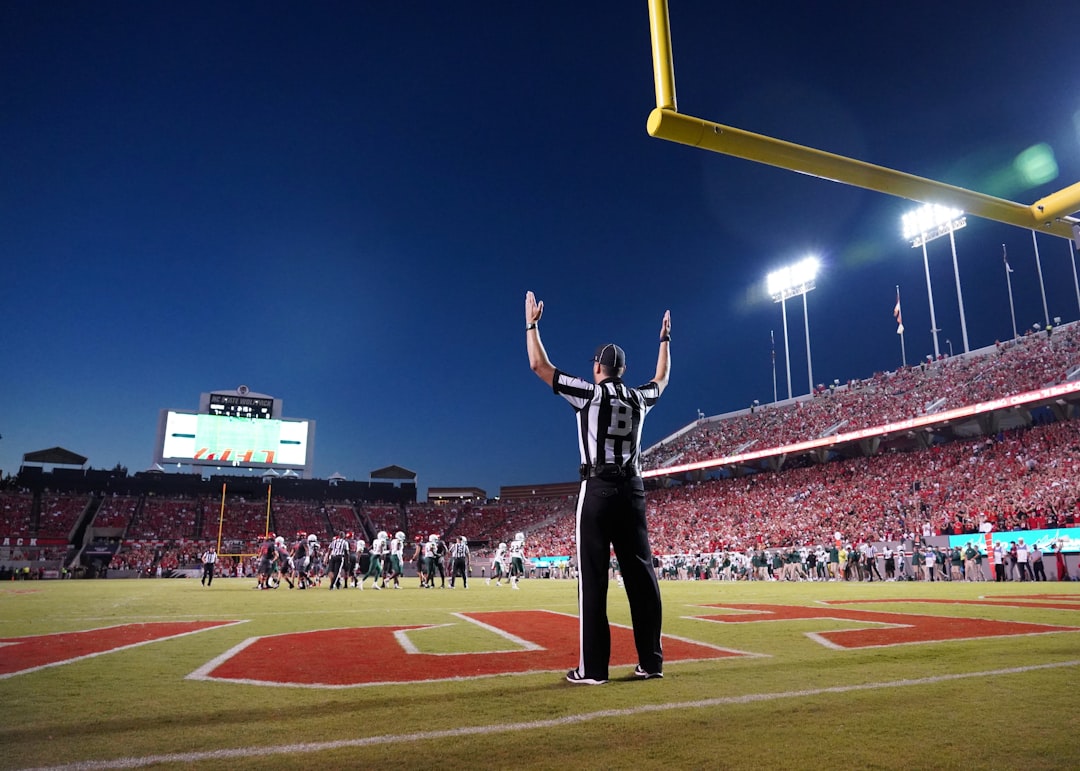
Determining who is favored to win the Super Bowl requires more than a glance at betting odds or pundit predictions. It demands a strategic analysis, much like deconstructing a final boss fight or mastering a complex game meta. The NFL season is a massive, real-time strategy game played out over months, with each team representing a unique build, complete with core mechanics, exploitable weaknesses, and specific win conditions. This guide will serve as your tactical playbook, breaking down the current meta, analyzing the top-tier “factions,” and outlining the precise strategies they must execute to reach the victory screen: hoisting the Lombardi Trophy.
The Tactical Objective: Defining the Super Bowl “Win Condition”
The primary objective is simple: win the final match. However, the “win condition” is a complex matrix of variables that must be achieved. It’s not merely about scoring more points; it’s about controlling the game’s core systems from the opening kickoff to the final whistle. A true Super Bowl victory is achieved through strategic dominance in multiple phases of the game.
Think of it as achieving several sub-objectives to unlock the final achievement. These include controlling the tempo (resource management via the play clock), winning the turnover battle (inflicting critical errors on the opponent), dominating field position (map control), and successfully executing in-game adjustments (adapting to the opponent’s strategy). The team that masters these interconnected systems is the one that truly secures the win.
Preparation Phase: Analyzing the Top Contenders for Super Bowl LIX
In any competitive game, the meta is defined by a few S-Tier contenders whose builds are so powerful they shape how everyone else must play. In the current 2024-2025 NFL meta, several teams have emerged with the roster construction, coaching systems, and elite “player units” necessary to be considered favorites. We will dissect the tactical builds of the most prominent contenders.
Kansas City Chiefs: The Veteran Dynasty Build
The Chiefs are the reigning champions, a faction defined by their experience, adaptability, and possession of the game’s most powerful “hero unit.” Their strategy is less about brute force and more about surgical precision and out-maneuvering opponents in high-leverage moments.
- Core Strengths (Key Mechanics):
- Improvisational Offense: Quarterback Patrick Mahomes possesses a unique ability to break from scripted plays, extending the “turn timer” and creating opportunities from seemingly broken sequences. This makes standard defensive strategies less effective.
- Coaching Synergy: The long-standing combination of Head Coach Andy Reid and Mahomes creates a level of strategic depth and in-game communication that is nearly impossible to replicate. They can “patch” their game plan on the fly.
- Clutch Defensive Play: While not always dominant for a full 60 minutes, the Chiefs’ defense, led by coordinator Steve Spagnuolo, specializes in generating pressure and forcing turnovers in critical, game-deciding moments.
- Key Weaknesses (Exploitable Flaws):
- Offensive Line Volatility: The protection for their hero unit can be inconsistent, making them vulnerable to teams with elite pass-rushing “units.” Sustained pressure is the primary counter.
- Receiving Corps Consistency: Outside of Travis Kelce, the reliability of their wide receivers can be a point of failure, leading to dropped passes that stall offensive drives.
- Path to Victory (Winning Strategy): The Chiefs win by allowing the Mahomes-Reid engine to dictate the flow of the game. They aim to build an early lead, forcing opponents into predictable passing situations where their opportunistic defense can create game-changing turnovers. Their victory is often sealed not with a knockout blow, but with a flawless final two-minute drill.
San Francisco 49ers: The Zone-Control Juggernaut
The 49ers represent a perfectly optimized system build. Every player is a cog in a highly efficient machine designed by Head Coach Kyle Shanahan. Their strategy is built on controlling the line of scrimmage, dictating tempo with a powerful run game, and creating high-probability throws for their quarterback.
- Core Strengths (Key Mechanics):
- Shanahan’s Offensive Scheme: An intricate system of zone-running plays and play-action passes that creates massive open lanes and windows. It’s designed to make any running back effective and any quarterback efficient.
- Versatile Skill “Units”: Players like Christian McCaffrey, Deebo Samuel, George Kittle, and Brandon Aiyuk are multi-role threats who can line up anywhere, creating severe matchup problems for defenses. McCaffrey is the ultimate “all-purpose unit,” effective in ground, air, and blocking assignments.
- Dominant Front Seven: The 49ers’ defense is built around a powerful defensive line that can generate pressure without needing to blitz, allowing more players to drop into coverage and clog passing lanes.
- Key Weaknesses (Exploitable Flaws):
- System Dependency: The offense can falter if it falls behind early and is forced to abandon its run-heavy, play-action identity. Their quarterback, Brock Purdy, is hyper-efficient within the system but less proven in high-pressure, “off-script” comeback scenarios.
- Secondary Vulnerability: While the front seven is elite, the defensive secondary can be exploited by teams with multiple high-end wide receivers and a quarterback who can deliver the ball quickly.
- Path to Victory (Winning Strategy): The 49ers’ win condition is to establish their ground game early, controlling the clock and wearing down the opposing defense. This sets up their devastating play-action pass, allowing them to generate explosive plays. They win by building a lead and strangling the opponent’s offense with their relentless pass rush.
Baltimore Ravens: The Unconventional Power Build
The Ravens have built their faction around the game’s most unique “hero unit” in quarterback Lamar Jackson. Their entire strategy subverts traditional offensive design, blending a punishing run game with an explosive vertical passing attack, all orchestrated by a player who is a threat to score from anywhere on the field.
- Core Strengths (Key Mechanics):
- Dual-Threat Quarterback: Lamar Jackson’s elite speed and agility force defenses to dedicate a “spy” unit to him on every play, which opens up lanes for other players. This fundamentally alters the geometry of the defensive side of the ball.
- Physical Defense: The Ravens consistently field one of the league’s most physical and intelligent defenses, excelling at creating turnovers and shutting down opposing run games. They control the “middle of the map” with authority.
- Elite Special Teams: With a kicker like Justin Tucker, the Ravens have an extended scoring range, allowing them to secure points from distances other teams wouldn’t attempt. This is a crucial resource advantage.
- Key Weaknesses (Exploitable Flaws):
- Offensive Consistency in Big Moments: In past playoff runs, the offense has struggled to maintain its rhythm against elite, well-coached defenses that are disciplined enough to contain Jackson.
- Pass Protection: Like many teams, their offensive line’s ability to hold up against elite four-man rushes in obvious passing situations can be a critical point of failure.
- Path to Victory (Winning Strategy): The Ravens win by imposing their physical will. They use Lamar Jackson’s unique talents to gash teams on the ground, control the clock, and then strike deep with play-action. Their defense aims to create short fields for the offense, and their special teams ensure no drive ends without a scoring threat.
The Strategy: A Play-by-Play on Who is Favored to Win the Super Bowl
Analyzing who is favored to win the Super Bowl involves more than just comparing roster strengths; it requires a deep dive into strategic matchups. How a team’s core mechanics interact with an opponent’s is the essence of high-level football. This is the tactical layer that determines champions.
Analyzing Head-to-Head Meta Matchups
Let’s simulate a potential Super Bowl matchup between the Chiefs and the 49ers to illustrate these strategic dynamics.
- The Opening Sequence (First Quarter): The 49ers’ primary objective is to execute their script: establish the run with Christian McCaffrey. This isn’t just about gaining yards; it’s about forcing the Chiefs’ linebackers to commit to the run, which sets up the play-action pass later. The Chiefs’ counter-strategy is to deploy their aggressive defensive front to create negative plays on early downs, forcing the 49ers into 3rd-and-long situations where their system is less effective.
- The Mid-Game Adjustment (Second & Third Quarters): Assume the 49ers have had some success on the ground. Now, Kyle Shanahan will begin to deploy his “counters.” He’ll use pre-snap motion with Deebo Samuel to diagnose the Chiefs’ defensive coverage. Andy Reid and Patrick Mahomes must now respond. They will likely use a high volume of short, quick passes to neutralize the 49ers’ formidable pass rush, led by Nick Bosa. This part of the contest is all about how to win a game through adaptation. The coach who makes the superior mid-game adjustment often seizes control.
- The Endgame (Fourth Quarter): This is where “hero units” take over. If the game is close, the 49ers will lean on their ball-control offense to drain the clock. The Chiefs, however, thrive in these high-pressure scenarios. They will put the game in Patrick Mahomes’ hands, relying on his improvisational magic to execute a game-winning drive. The entire game boils down to this: Can the 49ers’ system protect a lead against the Chiefs’ un-systematic, clutch play?
Identifying the Key “Player Units” to Watch
In any strategy game, certain units have a disproportionate impact on the outcome. In the Super Bowl, these are the players whose performance can single-handedly swing the game.
- The Quarterback (The “Hero Unit”): Players like Patrick Mahomes (Chiefs) and Lamar Jackson (Ravens) are the ultimate hero units. Their unique abilities force opponents to build their entire defensive game plan around stopping them. A quarterback like Brock Purdy (49ers) is more of a “System Commander,” excelling at executing the designed strategy with precision.
- The Multi-Role Weapon (The “Swiss Army Knife”): San Francisco’s Christian McCaffrey is the prime example. He is an elite running back, an excellent receiver, and a solid pass-blocker. This versatility creates tactical nightmares, as a defense never knows how he will be deployed on a given play.
- The Pass Rusher (The “Siege Unit”): A player like Nick Bosa (49ers) or Chris Jones (Chiefs) is designed to break the opponent’s most critical structure: the offensive line. Their sole purpose is to disrupt the opposing quarterback, and their success or failure can dictate the entire flow of the game.
- The Lockdown Cornerback (The “Counter-Unit”): Players like Sauce Gardner (Jets) or Trent McDuffie (Chiefs) are defensive specialists designed to neutralize the opponent’s top wide receiver. Winning this one-on-one matchup can effectively remove a key piece from the opposing team’s strategic arsenal.
Common Pitfalls: Why Favored Teams Fail (Game Over Scenarios)
Even the most dominant “builds” can be defeated. Super Bowl history is littered with favored teams that fell short due to critical errors or a failure to adapt. Understanding these common pitfalls is key to analyzing a team’s true championship potential.
- Turnovers (Critical System Errors): An interception or a fumble is the most devastating error in the game. It’s not just a loss of a possession; it’s a massive swing in momentum and field position, effectively gifting resources to the opponent. Teams that are turnover-prone, no matter how talented, are always at risk of a “game over” scenario.
- Injuries (Sudden Unit Loss): Losing a key player, especially a quarterback or a cornerstone offensive lineman, is like losing your queen in chess. The entire strategic framework can collapse. A team’s depth and its ability to plug in a “backup unit” without a significant drop-off in performance is a critical, often overlooked, aspect of a championship build.
- Special Teams Meltdown (Support System Failure): A missed field goal, a shanked punt, or a long kickoff return can completely alter the game’s resource balance. These are often seen as minor plays, but their cumulative effect on field position and points can be the difference between winning and losing.
- Failure to Adapt (Ignoring the Meta-Shift): The most common downfall of a favored team is rigid adherence to a game plan that isn’t working. When an opponent presents a successful counter-strategy, the coaching staff must be able to adjust. A failure to do so leads to a predictable, and often swift, defeat.
FAQ: Answering Your Tactical Questions About Who is Favored to Win the Super Bowl
Here are answers to some common strategic questions that arise when analyzing the Super Bowl landscape.
-
How much do preseason predictions really matter?
-
Treat preseason predictions as early-game theorycrafting. They are based on a team’s roster build and past performance, which is valuable data. However, the true “meta” of an NFL season only reveals itself after several weeks of play. Injuries, breakout performances from new “units,” and strategic shifts by coaching staffs can dramatically alter the landscape. Preseason favorites are a good starting point, but you must analyze the evolving data as the season progresses.
-
What is the single most important statistic for determining a Super Bowl favorite?
-
There is no single “god stat,” but some are more predictive than others. While traditional stats like total yards are useful, advanced metrics offer a clearer picture. Statistics like DVOA (Defense-adjusted Value Over Average), which measures a team’s efficiency on a play-by-play basis compared to the league average, or EPA (Expected Points Added), which quantifies how much a single play improves a team’s scoring chances, provide a much deeper analytical insight. A team that ranks highly in both offensive and defensive EPA is almost always a legitimate contender.
-
Can an underdog team “cheese” its way to a Super Bowl win?
-
In gaming, “cheesing” refers to using a simple, often gimmicky, strategy to win. In the NFL, this is extremely rare. An underdog victory is better understood as a “hard counter.” It usually happens when the underdog’s specific strengths perfectly align with the favorite’s specific weaknesses. For example, a team with an elite pass rush (their strength) might defeat a favored team with a weak offensive line (their weakness). It’s not a gimmick; it’s a targeted, high-risk, high-reward strategy that exploits a fatal flaw in the opponent’s build.
-
How much do coaching strategies influence who is favored to win the Super Bowl?
-
Immensely. The head coach and his coordinators are the “players” controlling the team units. A team with an elite roster but a subpar coaching staff is like a powerful army with a poor general; its potential will be wasted. Coaches are responsible for the initial game plan, in-game adjustments, clock management, and player development. A master strategist like Andy Reid or Kyle Shanahan provides a massive tactical advantage that is often as valuable as having an All-Pro player at a key position.
Ultimately, the team favored to win the Super Bowl is the one with the most robust and adaptable strategic build. It’s a combination of elite player units, a sound and flexible game plan, and the ability to execute flawlessly when the pressure is at its peak. While we can analyze the data and break down the matchups, the final outcome is determined by which team plays its game to perfection on the biggest stage.
Be sure to comment below if this article helped you!
Leave a Reply